
 EN
EN
If you have ever spent an afternoon trying to source a tiny metal part that has a complex cross-section, several blind holes, and a tolerance that makes machinists hesitate, you know the struggle is real. The components that keep industrial systems operational are often the ones hidden from view. We are talking about the miniature fasteners that secure fluid lines without leakage, and the seal bodies that prevent high-pressure media from escaping into the work environment. These are not the prominent, visible elements featured in glossy product brochures; they are the unsung workhorses of industrial assembly, and they are notoriously difficult to produce using conventional subtractive methods. For decades, the default approach was to machine them from bar stock—a process that often wastes upwards of eighty percent of the raw material and consumes expensive carbide tooling. However, a far more efficient method exists for bringing these intricate geometries to production: Metal Injection Molding (MIM).
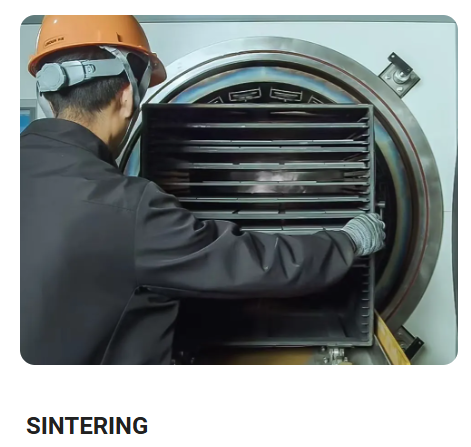
The defining advantage of MIM lies in its capability for net shape manufacturing. Instead of beginning with a solid block and removing everything that is not the part, the process starts with a homogeneous feedstock composed of fine metal powder and a polymer binder. This mixture is injected into a mold cavity that is a precise scaled-up version of the final geometry. Subsequently, the binder is removed, and the remaining metal skeleton is sintered at high temperature, during which it densifies and shrinks to its final, solid dimensions. The component that exits the furnace requires little to no secondary machining. For intricate items like specialty seals and custom fasteners, this methodology fundamentally transforms the economic equation of production. It enables the consolidation of multiple components into a single piece, eliminates potential leak paths, and facilitates geometries that would be impossible—or prohibitively fragile—to produce with micro-cutting tools.
Why Seals and Fasteners Are Ideal Candidates for MIM
At first glance, a fastener like a bolt or screw might appear to be the simplest of components. While this holds true for standard, off-the-shelf hardware, the fasteners used in demanding sectors such as precision engineering, medical technology, and high-performance automotive systems are anything but elementary. They often feature integrated captive washers, specific underhead fillet geometries, non-standard internal drive recesses, and frequently, micro cross-drilled holes for retention mechanisms. Machining this constellation of features into a small piece of stainless steel or titanium requires multiple setups, specialized fixturing, and results in significant material scrap.
Seals present an even greater fabrication challenge. A metal seal ring for a high-pressure fluid coupling requires a precise contour on its sealing face. This contour might be a rounded peak or a stepped profile engineered to achieve a specific crush force when torque is applied. Machining this contour inevitably leaves behind micro-tool marks that can act as potential leak channels. While polishing can mitigate these marks, it adds labor cost and introduces the risk of altering the critical sealing geometry. With MIM, the complex sealing face is formed directly in the mold. After sintering, the surface is dense and smooth, ready for service without additional finishing. The consistency from the first part off the line to the millionth is exceptionally stable.
This is where the expertise of a specialized production partner becomes invaluable. They understand that a seal is fundamentally a pressure boundary, and a fastener is a precisely controlled clamp load. By leveraging MIM for these applications, engineers can circumvent the compromises inherent in traditional machining, receiving a part that matches the exact design intent rather than the geometry most convenient for a CNC lathe.
The Net Shape Advantage: Material Efficiency and Process Consolidation
Conventional machining is, by definition, a subtractive process. This means purchasing a large volume of high-value metal and converting the majority of it into chips. For small, complex parts like miniature threaded inserts or specialty seal housings, the "buy-to-fly" ratio is extremely unfavorable. It is not uncommon to purchase a full kilogram of alloy to produce a final component weighing only a few grams. This is both an environmental inefficiency and a direct drain on project budgets.
Net shape manufacturing via MIM reverses this dynamic. Feedstock utilization in MIM is remarkably high, typically exceeding 95%. Nearly all the purchased metal material ends up in the finished component. This alone represents a significant advantage in terms of sustainability and cost control. However, the net shape benefit extends beyond material savings to include process step elimination. A machined fastener might require a primary turning operation, a secondary milling step for the drive recess, and a tertiary cross-drilling operation. That equates to three distinct setups and three opportunities for error.
With MIM, all of these features—the underhead geometry, the shoulder, the drive pocket, and the cross-hole—are formed simultaneously within the mold cavity. While process engineers must account for the isotropic shrinkage that occurs during sintering, once the scaling factor is established, the process repeats with remarkable fidelity. For supply chain managers, this translates to receiving a finished component that moves directly from incoming inspection to the assembly line, bypassing deburring, degreasing, and thread-chasing operations.
Achieving Precision Tolerances on Micro-Scale Features
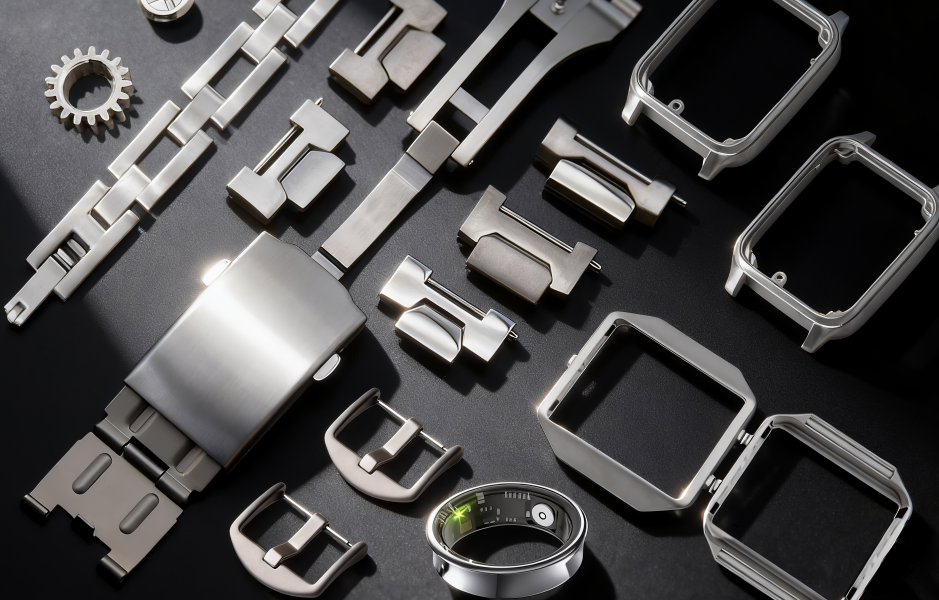
A common misconception regarding MIM is that it cannot meet the tight tolerance requirements of precision components. While this may have been a limitation in the technology's early stages, modern MIM processing is capable of achieving tolerances that are competitive with precision machining, particularly on small-scale geometries. An interesting physical dynamic supports this capability: in micromachining, as part features shrink, the relative impact of cutting forces and tool deflection increases dramatically. A minute vibration in a spindle can easily erode the tolerance window on a micro-fastener.
In MIM, the geometry is dictated by the mold cavity, and the sintering shrinkage is uniform. Because the target features are small, the absolute linear shrinkage is measured in thousandths of an inch across a critical sealing diameter. Through rigorous process control and the use of ceramic setters—custom fixtures that support the component geometry during the high-temperature sintering cycle—MIM suppliers can achieve batch-to-batch consistency that is difficult to replicate with subtractive methods.
Consider a metal seal utilized in a high-pressure industrial application. The seal may feature a non-circular geometry with a series of engineered peaks and valleys designed to bite into a mating surface. The tolerance on the peak radius might be a fraction of a percent of the nominal dimension. For a feature measuring only a few millimeters wide, this is an exceptionally narrow manufacturing window. Achieving this via milling would necessitate specialized form cutters and extremely gentle machining parameters. With MIM, once the mold cavity is precision-cut to the correct oversized dimensions, every subsequent part replicates that exact peak radius with minimal variation.
Material Selection for Demanding Operational Environments
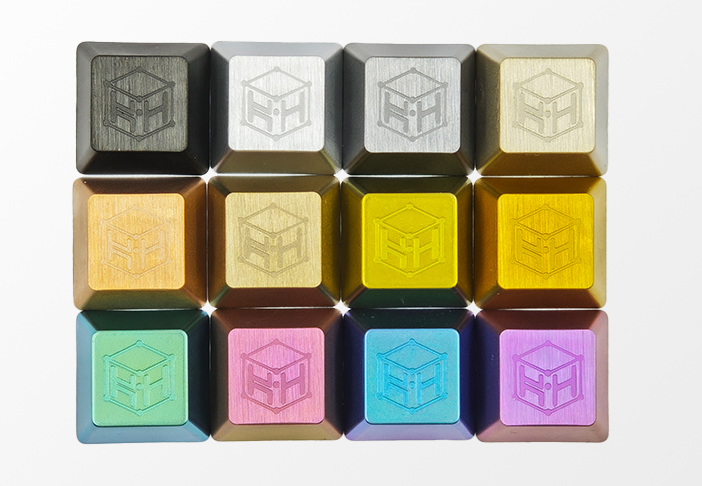
Seals and fasteners rarely operate in benign conditions. They are exposed to corrosive fluids, extreme thermal cycling, and dynamic loads ranging from zero to full tensile strength millions of times over the component's lifecycle. Such applications demand high-performance alloys capable of enduring these stresses. MIM offers a broad material portfolio ideally suited to these harsh environments, including widely used grades like 17-4PH stainless steel, 316L stainless steel, and various titanium alloys.
A key advantage of MIM is that the mechanical properties of these alloys—when properly sintered—are comparable to those of wrought material. A MIM-produced 17-4PH fastener will exhibit tensile strength and hardness equivalent to a part machined from bar stock. Moreover, the MIM variant may demonstrate superior fatigue resistance because its surface is free of the directional tool marks that act as stress risers in machined components. The isotropic surface finish of a MIM part, while slightly textured, is often beneficial for sealing interfaces.
Furthermore, because the part is formed in a closed mold, designers can incorporate features that are practically un-machinable. Consider a fastener with an enclosed, hollow internal volume designed to reduce mass without compromising structural integrity. Such a geometry presents a near-impossible challenge for a machine shop but is entirely feasible with MIM. The ability to strategically distribute mass precisely along the load path while minimizing the overall envelope is a significant design advantage for next-generation industrial and transportation systems.
Hidden Efficiencies: Assembly Simplification and Enhanced Reliability
While the per-unit price of a MIM component is often lower than a machined equivalent at medium to high production volumes, the most substantial savings frequently manifest downstream during final assembly. Because MIM enables the consolidation of multi-part assemblies into a single monolithic component, it reduces both assembly labor and the number of potential failure modes.
For instance, consider a threaded fluid fitting that also functions as a sealing interface. In a conventional design, this might require a separate O-ring or crush washer to be installed over the threads. This introduces an additional part number to inventory, track, and assemble—and creates a potential point of installation error. With MIM, the designer can integrate a raised sealing bead directly onto the flange face of the fitting. The entire component becomes a single, homogeneous piece of metal. When the technician applies torque, the integrated bead deforms to create a robust metal-to-metal seal, eliminating the risk of a dry-rotted, pinched, or forgotten elastomeric element.
Similarly, a MIM fastener can be produced with a captive washer that is formed in place within an undercut. This washer spins freely but cannot be separated from the fastener body. Any technician who has struggled to align a loose washer in a confined space understands the practical value of this feature. It streamlines the assembly process, reduces the risk of foreign object debris, and contributes to a more refined, well-engineered product.
When to Transition from Machining to MIM
The decision to migrate a component from subtractive manufacturing to MIM involves a specific evaluation matrix. For the right component profile, the benefits of net shape MIM are compelling. The criteria for a strong MIM candidate are relatively straightforward: Is the part small? Does it feature complex geometry requiring multiple machining operations? Is the annual volume projected in the thousands or millions? Does it utilize a standard MIM-compatible alloy such as stainless steel? If the answer to most of these questions is affirmative, sticking with bar stock machining likely leaves both financial savings and performance improvements unrealized.
The transition typically begins with a Design for Manufacturability (DfM) review. A qualified MIM partner will evaluate the existing part drawing and recommend minor modifications to optimize the design for the injection molding and sintering processes. This might involve adding a slight draft angle to a deep pocket or replacing a sharp internal corner with a generous radius to facilitate powder flow. These adjustments are generally minor and do not compromise the part's functional intent; in many cases, they actually enhance component strength by eliminating stress concentrations.
Once the tooling is fabricated and the process parameters are validated, the production workflow becomes remarkably stable. The result is a consistent supply of high-precision, net shape seals and fasteners that perform reliably without requiring additional intervention. This level of manufacturing efficiency—the ability to produce complex, high-integrity components with minimal waste—represents a significant leap forward in industrial production capability. For the intricate metal parts that serve as the foundation of reliable systems, MIM technology has made achieving this ideal both practical and economically sound.
Table of Contents
- Why Seals and Fasteners Are Ideal Candidates for MIM
- The Net Shape Advantage: Material Efficiency and Process Consolidation
- Achieving Precision Tolerances on Micro-Scale Features
- Material Selection for Demanding Operational Environments
- Hidden Efficiencies: Assembly Simplification and Enhanced Reliability
- When to Transition from Machining to MIM
