
 EN
EN
When working with metal additive manufacturing, encountering challenges is common. You might spend hours perfecting a CAD model, carefully slicing it, and setting machine parameters precisely, only to get disappointing results with defects like porosity, rough surfaces, or cracks. Before you start adjusting laser power or scan speed again, there's a fundamental factor you need to examine closely—the Ti6al4v powder itself.
Think of the powder as the flour in a sophisticated recipe. No matter how advanced your oven is, the quality of the flour determines the texture, strength, and consistency of your final product. In laser melting, the powder bed is the foundation for every single layer. The characteristics of the powder directly control how the laser interacts with the material, how the melt pool forms and solidifies, and, ultimately, the integrity of the finished component. Investing in high-quality powder isn't just a material cost; it's an investment in predictable outcomes, less waste, and more successful builds.
The Blueprint for Success: Key Powder Characteristics
Not all titanium powders are created equal. For the demanding process of laser melting, several interlinked characteristics define a superior Ti6al4v powder feedstock.
Powder Morphology and Flowability: The Foundation of a Uniform Bed
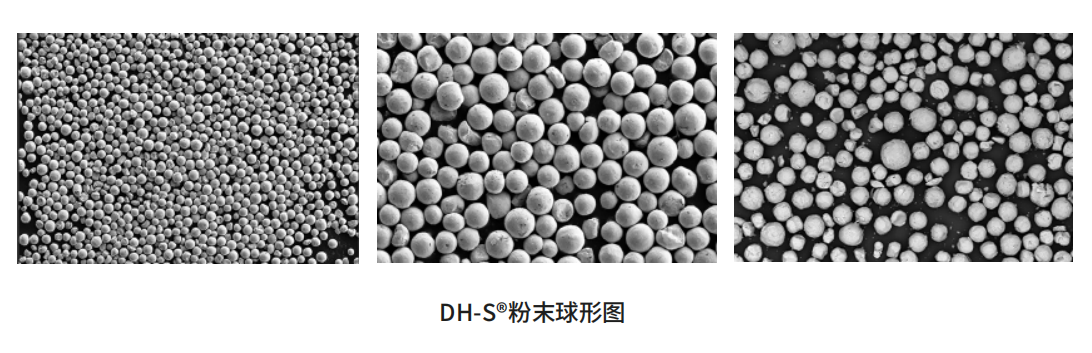
This is arguably the most visible quality factor. Powder particles need to be highly spherical. Spherical particles flow like tiny ball bearings, allowing them to spread into a dense, even layer across the build platform. Irregular, satellite-laden, or elongated particles create friction, leading to poor packing density and a bumpy, inconsistent powder bed. When the laser hits this uneven surface, energy absorption varies, causing incomplete melting in valleys and overheating on peaks. This results in porosity, poor dimensional accuracy, and potential damage to the recoater blade. Advanced production technologies, like our proprietary DH-S® spheroidizing process at Kyhe Tech, are engineered to achieve this ideal spherical morphology and excellent flowability, ensuring a flawless starting point for each layer.
Particle Size Distribution: Controlling Detail and Density
The size range of the powder particles is critical for achieving fine resolution and optimal part density. A tightly controlled, Gaussian-like distribution is ideal. A distribution that is too wide can allow fine particles to fill voids between larger ones, which might seem good for density. However, these fine particles are highly susceptible to vaporizing and becoming airborne spatter ("smoke") during laser melting. This can contaminate the machine's optics and create inclusions in the part. They also have a higher surface area, which can increase oxygen pickup. Conversely, using only very coarse powder limits the fine features you can achieve and leads to a rougher surface. An optimized particle size distribution strikes the perfect balance, enabling smooth surfaces, fine details, and stable melting dynamics.
Chemical Purity and Consistency: The Invisible Decider
The legendary mechanical performance and corrosion resistance of Ti6Al4V depend on a precise chemical composition (roughly 90% Ti, 6% Al, 4% V) and extreme purity. Contaminants like iron, carbon, or silicon can form brittle intermetallic phases at microscopic grain boundaries, acting as starting points for cracks under stress. Furthermore, titanium is highly reactive to oxygen and nitrogen. Even slight increases in these interstitial elements can dramatically embrittle the alloy, reducing its ductility and fatigue strength. High-quality powder is produced and handled in inert environments to keep oxygen content exceptionally low, preserving the alloy's intrinsic properties. This unwavering batch-to-batch chemical consistency is non-negotiable for serial production where part certification and reliability are paramount.
Recyclability and Sustainability: The Lifecycle Advantage
In laser melting, only a fraction of the powder in the build chamber is fused into the final part. The unmelted powder, often called "sieve-reclaimed" material, can and should be reused to improve process economics. However, not all powder survives this cycle well. Poor-quality powder may oxidize further or change morphology after repeated heating cycles in the build chamber, degrading its flow and melting behavior. Powder engineered for high recyclability maintains its key characteristics over multiple uses, supporting sustainable and cost-effective manufacturing. At Kyhe Tech, we champion this lifecycle approach, underpinned by our Global Recycled Standard (GRS) certification, which validates material recycling rates exceeding 95%, ensuring sustainability is built into our powder from the start.
From Powder to Performance: The Real-World Impact
The cumulative effect of these powder properties is directly visible in the parts you produce.
- Enhanced Mechanical Properties: Builds from high-quality powder achieve low porosity and high chemical purity, resulting in tensile strength, ductility, and fatigue life that meet or exceed wrought Ti6Al4V specifications. This is critical for aerospace, medical, and automotive applications.
- Superior Surface Finish and Precision: A uniform powder bed and controlled melt dynamics lead to smoother as-built surfaces and the ability to reproduce intricate geometries like lattice structures. This reduces post-processing needs for industries like consumer electronics, where we provide ultra-lightweight, corrosion-resistant component solutions.
- Process Reliability and Yield: Consistent powder flow eliminates spreading issues and reduces build failures. Predictable melting behavior minimizes parameter guesswork, speeding up development and increasing the yield of successful parts—especially vital for prototyping and small-batch production.
Our Commitment as Your Technology Partner
Navigating the complexities of Ti6al4v powder for laser melting is about more than purchasing a material; it's about establishing a trusted partnership. The goal is to provide a reliable foundation that removes variability and risk from your additive manufacturing process.
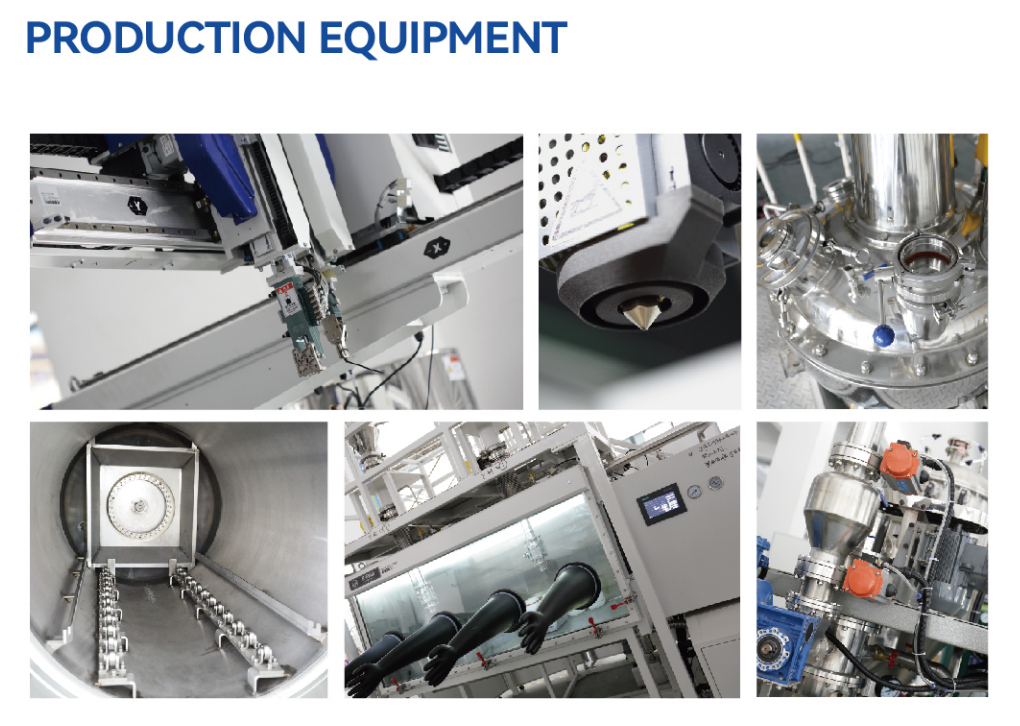
This is the core of our mission at Kyhe Tech. By controlling the entire powder lifecycle with our proprietary DH-S® spheroidizing technology, we ensure that the critical pillars of quality—superior spherical morphology, tightly controlled chemistry, and exceptional batch-to-batch consistency—are intrinsic to every particle of powder we deliver. This technical mastery directly translates to the part performance and process reliability your projects demand.
Our model is built on being a complete solution provider. We offer integrated support, from initial material consultation and application-specific parameter guidance to final part production for industries including medical, automotive, and 3C electronics. This expertise helps you accelerate development, reduce costly trial and error, and de-risk production. Combined with our certified commitment to sustainable manufacturing, partnering with Kyhe Tech means choosing a path toward more predictable, efficient, and responsible innovation.
In conclusion, in the precise world of laser melting, powder quality is not a variable; it is the prerequisite for success. By choosing a partner dedicated to engineering this critical feedstock with advanced technology, unwavering consistency, and full-cycle support, you build the solid foundation needed to realize your most ambitious designs—layer by perfect layer.
