
 EN
EN
Today, let's shed some light on a behind-the-scenes hero in additive manufacturing (AM) – the particle size distribution (PSD) of titanium powder. It may seem like a minor characteristic, but the PSD of titanium powder can determine success or failure in the AM process. PSD powder characteristics may be the culprit behind poor packing, inconsistent powder flow, or degraded overall part quality and consistency. Just a lack of effective particle size distribution can explain your process challenges. The issue isn't simply the mean particle size of the powder; it is the distribution of the values that describes the PSD of the powder.
To illustrate, imagine the composite material used to create a sturdy, solid, and dense wall. If, for example, only large boulders are used, large gaps will be present. If only fine particles are used, the composite will lack stability. However, through the judicious use of a variety of different-sized materials, smaller mediums can be used to fill the gaps and create a unified structure. The same composite principles can be applied to titanium powder in the AM process. The flow characteristics and packing density of titanium powder are largely a manifestation of the PSD characteristics.
Uncovering The Essentials of Particle Size Distribution
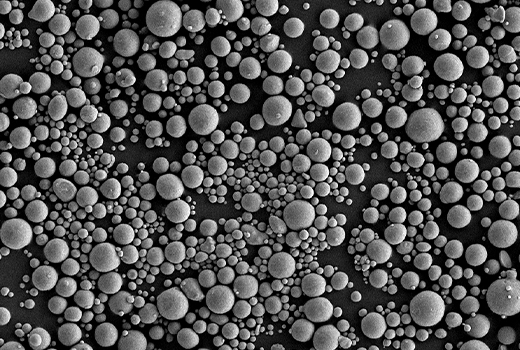
Let's explain this first. Particle size distribution places statistical data on the powder sample based on the different size distributions of its constituent particles. This distribution is typically depicted pictorially. A narrow distribution means most particles are similar. A broad distribution means a wide variety of particle sizes are present. Concerning powder titanium used for Powder Bed Fusion (PBF) or Metal Injection Molding (MIM) processes, the right distribution is engineered. It is not a result of the random nature of processing. The powder production optimized distribution from KYHE and DH-S® processes shows engineered precision for balanced flow, density, and end component attributes, tailored for specific performance objectives.
How PSD Directly Dictates Powder Flowability
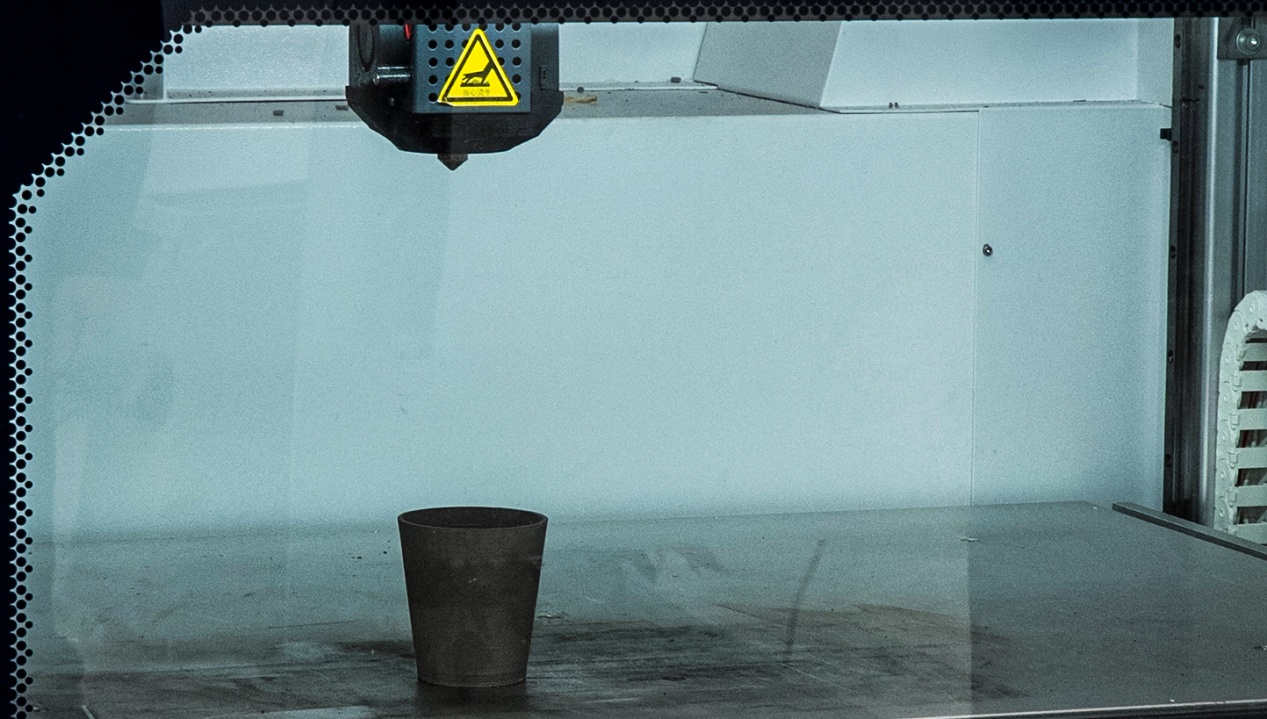
It is about the ease and consistency with which powder moves and flows. In AM, this is especially important for the even and uniform layers that need to be created.
The Function of Very Fine Particles
A large amount of fine particles can be a serious issue. These particles tend to be more cohesive, so they stick together due to forces such as static electricity and moisture. This can lead to clumping, which can cause poor flow or clogging within feeding systems, and, eventually, the formation of uneven layers within the powder bed. It is no surprise that poor flow will be perceived as defects in the final part.
The Value of Spherical Particles and Ideal Size
Here is where KYHE focuses on the best of powder manufacturing elements, in spheroidization/gas atomization. These are some of the best powder manufacturing process available to create particles of perfect sphericity in a size range that is ideal for fluid-like flow. When particles are in the shape of a sphere, they can glide and roll over one another with no resistance. When a powder of perfect sphericity is combined with a controlled PSD that minimizes fine, cohesive fractions, you get excellent flow. The powder behaves like a fluid, which of course is a key element in fast and continuous recoating, and dependable layer formation. This consistently reliable performance is a prerequisite for the mass production and scaling up from prototyping.
The Relation Between PSD and Packing Density
Packing density is described as the amount of solid material and the given volume and minimally includes air gaps (porosity). In the powder bed, the higher the packing density, the higher the number of particles that are sitting tightly without any fusions from the laser or electron beam.
The "Binary Mixture" Model
The classical explanation states that a bimodal distribution—a purposeful mix of big and small particles—will yield the greatest density. The small particles fill the gaps within the large ones. This high density packing has great advantages as it decreases the amount of energy needed for melting (there are fewer large air gaps to overcome), reduces the amount of shrinkage that occurs during the sintering process, and can enhance the composition of the final part by reducing the amount of porosity.
More Than Basic Models
Each method used in AM comes with its own set of guidelines and considerations tailored specifically toward their intended design. When looking at MIM, having high packing densities is beneficial. However, in PBF, having an extremely dense powder bed can hinder the laser's ability to penetrate and disrupts the dynamics of the melting pool. As such, PSD (Particle Size Distribution) needs to strike the right balance between the ideal density and one that can be absorbed by the laser to achieve melting. Essentially, each machine and specific settings needs to have a balance that results in the ideal PSD. When done right, the melting will always behave the same.
The Added Value of PSD
Getting the PSD optimized will have a positive "snowball" effect on the entire system.
Yield and Process Stability
If the powder is evenly distributed with a consistent PSD, the powder flow is unhindered and builds can run uninterrupted. Since the PDs determine the success or failure of a build, more success means less wasted material and machine time, and a far lower cost per part to complete the job. Combined with technologies such as KYHE's DH-S® which promise to make metal powder significantly cheaper, the cost of powder becomes far less of a concern with high reliability in processing.
Surface Finish and Detail Resolution
Contouring and surface detail is better and more uniform with a more compact and uniform powder bed since it creates more even and smooth surfaces on vertical and down-facing surfaces. The laser or electron beam fuses a solid outline. This is especially important in complex applications in all KYHE solutions, including medical implants, aerospace, and high-end 3C electronics.
Material Efficiency and Sustainability
An optimized PSD waste is minimized. The powder flows completely out of recoaters and feed systems, and the high build success rate means less unused powder is contaminated from failed jobs. This is a perfect match with a sustainable manufacturing ethos. It is worth noting that some of the leaders in the titanium powder space are embedding this from the start, with some achieving the Global Recycled Standard (GRS) and closed-loop systems where over 95% of material are recycled, which makes more eco-conscious advanced manufacturing.
Conclusion: PSD as a Strategic Foundation
Particle size distribution is an economic and quality influential specification on a data sheet of titanium AM and its manufacturability. It is not about the chemistry when it comes to choosing a titanium powder supplier, but about the partnership with the experts who understand and dominate these granular dynamics.
The most innovative suppliers don't just sell powder; they offer an engineered solution for performance. They use exclusive technology for sphericity and controlled distribution, and even consider sustainable sourcing. This provides a foundation for innovation that is stable, cost-effective, and reliable. When you build with a careful attention to PSD, you are building success, literally, from the ground up, one precise layer at a time.
