
 EN
EN
Let's be honest. In additive manufacturing (AM), we often get captivated by the printers—the lasers, the speed, the intricate dances of machinery. But the real magic, the unsung hero, starts much earlier. It begins with a pile of fine, metallic powder. For high-stakes industries, that powder is increasingly titanium. The journey from raw titanium powder to a flight-ready aerospace bracket or a life-changing medical implant is a story defined by powder characteristics. This isn't just materials science; it's the foundation of performance, cost, and reliability. Understanding these characteristics isn't optional for engineers and decision-makers; it's critical for unlocking the full promise of AM.
Beyond the Hype: The Powder-Centric Reality of AM Success
Everyone talks about design freedom with AM. But that freedom hits a hard wall if your powder feedstock is inconsistent. Think of titanium powder as the DNA of your final part. Its inherent properties—shape, size, purity—dictate the health and capabilities of the finished component. A shift in powder quality can mean the difference between a part that passes rigorous qualification and one that fails catastrophically. For too long, the industry accepted high costs and supply chain fragility as the price of using titanium. Today, that's changing. Forward-thinking suppliers are focusing on powder innovation not just as a material supply issue, but as a total value equation, balancing extreme performance with unprecedented cost efficiency and environmental stewardship. This powder-centric mindset is what separates prototypes from production-grade parts.
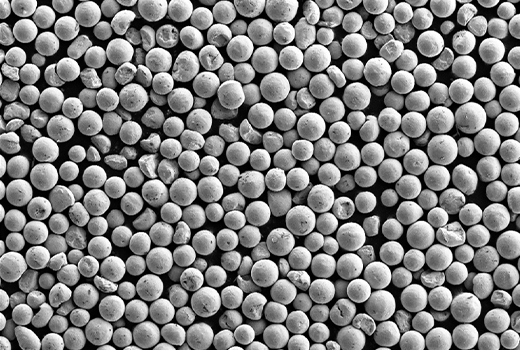
Sphericity: The Non-Negotiable Geometry for Perfect Layers
Why is shape so crucial? In powder bed fusion, a recoater blade spreads layers thinner than a human hair. Irregular, jagged particles with "satellites" (smaller particles stuck to larger ones) don't flow. They clump, drag, and create voids. The result? Inconsistent layer density, which introduces microscopic weaknesses, porosity, and potential build failures. High sphericity—near-perfect roundness—makes powder flow like water. This ensures a perfectly dense, uniform powder bed every single layer. It's the absolute prerequisite for achieving the anisotropic mechanical properties designers rely on. Achieving this isn't simple. It requires advanced atomization and proprietary spheroidization processes, like some suppliers' patented DH-S® technology, which transforms raw material into geometrically ideal powder. This isn't just a quality metric; it's a direct enabler of yield and part reliability.
Particle Size Distribution (PSD): The Precision Dial for Detail and Density
You wouldn't use gravel to detail a fine sculpture. Similarly, PSD is your precision dial. A finer distribution (e.g., 15-45 µm) enables stunning feature resolution and smooth surface finishes straight off the build plate, critical for medical implants or thin-walled aerospace ducts. A coarser distribution (e.g., 45-106 µm) may favor faster build rates and better flow for larger parts. But the true secret is the tight control of this distribution. A narrow, Gaussian curve means particles pack together with minimal voids, like a bin of identical marbles. This leads to higher green density and, after melting, parts with exceptional density (>99.5%) and uniform mechanical strength. Leading powder producers don't just offer one grade; they engineer PSDs tailored for specific printer families and application niches, giving process engineers a vital tool for optimization.
Chemical Purity and Microstructure: The Invisible Engine of Performance
This is where the rubber meets the road. Titanium, especially alloys like Ti-6Al-4V, is famously reactive. Even slight elevations in interstitial elements like Oxygen and Nitrogen can dramatically embrittle the material. Premium powder is manufactured and handled under argon or vacuum to keep these levels ultralow (often O2 < 1300 ppm). This purity is what allows AM parts to match or exceed the fatigue life and fracture toughness of forged titanium. Equally critical is the microstructure formed during rapid solidification in the powder particle itself. A fine, homogeneous microstructure in the powder translates to a superior, consistent microstructure in the built part. When a powder supplier guarantees batch-to-batch consistency in chemistry and microstructure, they are providing the bedrock for repeatable, certifiable production—the key to moving from R&D to serial manufacturing.
The Sustainability and Cost Revolution: Changing the Game
Historically, the "why not" for titanium AM was simple: cost. Titanium powder was prohibitively expensive. This paradigm is shattered by innovations in sustainable powder production. The most impactful development is the use of certified recycled feedstock—often up to 100%—to create high-performance alloy powder. By building a circular economy model with ultra-high material utilization (over 95%), pioneers in this space are achieving reductions in powder cost that were once unthinkable. We're talking about driving costs down toward parity with some specialty steels. This isn't just greenwashing; it's a fundamental economic shift. The GRS (Global Recycled Standard) certification for titanium powder, a milestone achieved by only a few globally, validates this. It means your supply chain is greener, your material costs are lower, and your end-product has a compelling sustainability story. This is how titanium breaks out of its niche and becomes viable for automotive, consumer electronics, and luxury goods.
The Integrated Solution: From Powder to Certified Part
The biggest hurdle for many adopters isn't just sourcing powder; it's navigating the entire journey to a finished part. This is where the real competitive advantage is built. Leading providers now act as true partners, offering a one-stop solution. This journey integrates:
Custom Powder Design: Tweaking alloy compositions or PSD for your specific application.
Application Engineering: Collaborating on design for additive (DfAM) to leverage powder capabilities.
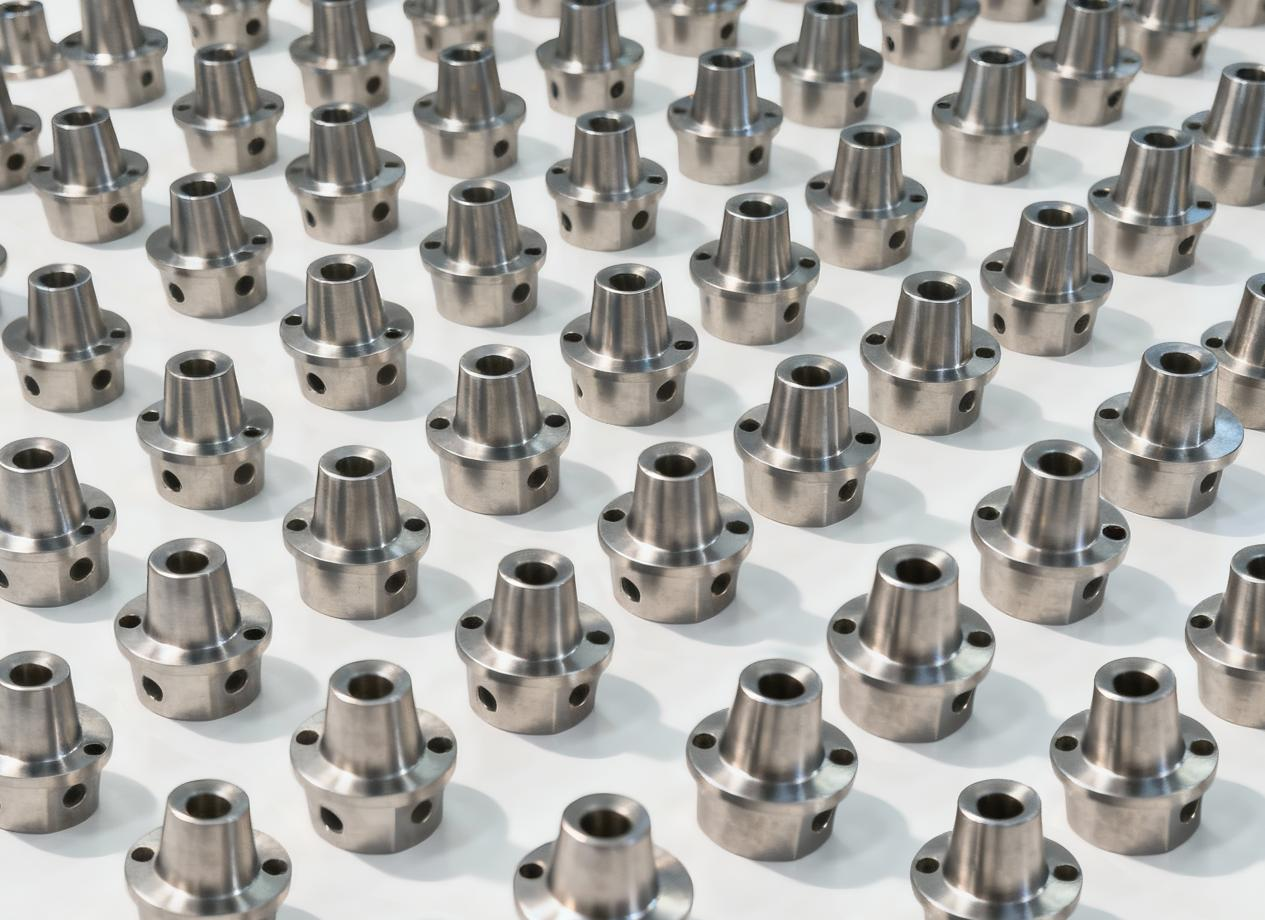
Prototyping & Small-Batch Trials: Using both AM and Metal Injection Molding (MIM) for rapid iteration and pilot production.
Serial Production: Scaling efficiently with MIM for high-volume, complex parts or AM for lower-volume, highly customized ones.
This vertical integration de-risks adoption. Companies can experiment, prototype, and scale with a single partner that maintains material and process integrity from start to finish, drastically shortening time-to-market.
Real-World Performance: Where Powder Properties Pay Off
Theory is good, but application is everything. Here's how superior titanium powder translates:
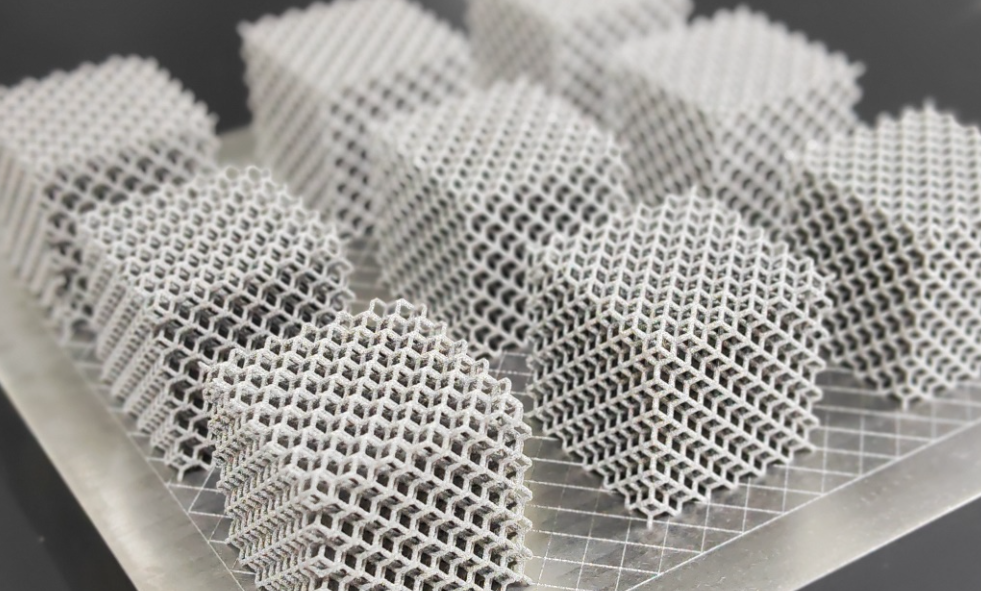
Medical & Dental: Ultra-fine, biocompatible powder enables patient-specific implants with complex lattice structures for osseointegration and precise surgical guides. Consistency is life-critical.
Aerospace & Defense: Powder with flawless purity and repeatable microstructure allows for the certification of lightweight, load-bearing components that withstand extreme stress and thermal cycles.
Automotive & Mobility: Cost-reduced, high-strength powder enables lightweighting of components like turbocharger wheels or suspension parts, directly improving efficiency and performance.
3C & Consumer Electronics: The ability to produce micro-precision, strong, and beautifully finished hinges, cases, and internal components makes titanium a reality for premium devices.
High-End Hardware: Durable, corrosion-resistant, and aesthetically superior parts for eyewear, watches, and sporting goods are now manufacturable at sensible costs.
Conclusion: The Future is Built on Powder Intelligence
The next frontier in additive manufacturing isn't necessarily a faster printer. It's smarter, more sustainable, and more economically viable materials. Titanium powder is at the forefront of this revolution. By mastering the characteristics—sphericity, PSD, purity, and microstructure—and coupling that mastery with sustainable production and integrated service, the industry is overcoming the final barriers. The message is clear: to achieve peak performance in your AM parts, you must start with peak intelligence about your powder. The companies that understand this are not just supplying a material; they are enabling a new era of manufacturing.
Table of Contents
- Beyond the Hype: The Powder-Centric Reality of AM Success
- Sphericity: The Non-Negotiable Geometry for Perfect Layers
- Particle Size Distribution (PSD): The Precision Dial for Detail and Density
- Chemical Purity and Microstructure: The Invisible Engine of Performance
- The Sustainability and Cost Revolution: Changing the Game
- The Integrated Solution: From Powder to Certified Part
- Real-World Performance: Where Powder Properties Pay Off
- Conclusion: The Future is Built on Powder Intelligence
