
 EN
EN
If you are working with titanium alloys, especially in the world of additive manufacturing, you have probably noticed that standards are not the same everywhere. Different countries have their own specifications. Different industries have their own requirements. And if you are sourcing material or selling parts across borders, that patchwork of standards can get confusing fast.
Take TC4 titanium, for example. That is the Chinese designation for the alloy that much of the world knows as Ti-6Al-4V. It is the workhorse of the titanium family. Strong, light, corrosion resistant. Used in aerospace, medical, automotive, you name it. In China, the go to standard for wrought forms of this alloy has long been GB/T 2965. But as additive manufacturing grows, and as powder based processes like powder bed fusion and metal injection molding become more common, people are asking how that standard lines up with the global specs used for AM powders.
Let us dig into that. What is in GB/T 2965? How does it compare to standards like ASTM F2924 or ISO 5832 3? And if you are buying TC4 titanium powder for 3D printing, what do you need to know?
What GB/T 2965 Actually Covers
GB/T 2965 is the Chinese national standard for titanium and titanium alloy bars and wires. It has been around for a long time and is well established in industries that use traditional manufacturing methods. If you are forging, machining, or otherwise working with solid TC4 titanium, this is the standard you look to.
It specifies things like chemical composition, mechanical properties, and testing methods for the material in its final form. It tells you how much aluminum should be in the alloy, how much vanadium, and what the allowable limits are for things like iron, oxygen, and nitrogen. It also gives minimum values for tensile strength, yield strength, and elongation.
The problem is, GB/T 2965 was written with wrought products in mind. Bars, rods, wires. Things you would machine or forge. It does not directly address powder. And powder is a whole different ballgame.
Why Powder Needs Its Own Set Of Rules
When you switch from solid metal to powder, a lot of things change. The material has to flow. It has to pack evenly. It has to melt and solidify in ways that are very different from what happens in a forge or a rolling mill. And the final part's properties depend not just on the chemistry, but on the powder characteristics and the printing process itself.
That is why standards like ASTM F2924 came into being. They are written specifically for additive manufacturing. They cover not just the chemistry, but also things like particle size distribution, powder morphology, and the mechanical properties of printed test specimens.
For TC4 titanium used in powder bed fusion, the chemistry requirements in ASTM F2924 are similar to those in GB/T 2965, but not identical. There are differences in the allowable limits for certain elements. And there are additional requirements in the AM standard that simply do not exist in the wrought standard.

The Chemistry Comparison
Let us get into the numbers a little. Both standards want to see roughly 6 percent aluminum and 4 percent vanadium. That is the core of the alloy. But the devil is in the details.
Oxygen is a good example. In GB/T 2965, the allowable oxygen content depends on the specific grade and application. For many grades, the limit is around 0.2 percent. In ASTM F2924, the limit is also typically 0.2 percent, but there are nuances. Too much oxygen makes the alloy brittle, especially in printed parts where the microstructure is different from wrought.
Iron is another one. The limits are generally low in both standards, but they do not always match exactly. If you are used to one standard and you start working with material certified to the other, you need to check the numbers.
These differences might seem small, but they matter. If you are making parts for aerospace, you have to meet the spec that your customer or regulator requires. You cannot just assume that material meeting GB/T 2965 automatically meets ASTM F2924. You have to verify.
Mechanical Property Requirements
The mechanical properties are another area where the standards diverge. GB/T 2965 specifies properties for wrought material. Tensile strength, yield strength, elongation. But those numbers come from testing bars or wires, not printed parts.
In additive manufacturing, the properties depend on the build parameters, the heat treatment, and the orientation of the part. A specimen printed vertically might have different strength than one printed horizontally. The standard has to account for that.
ASTM F2924 gives requirements for specimens that are printed and tested under specific conditions. It recognizes that the properties of printed TC4 titanium can be different from wrought, and it sets appropriate targets.
If you are a manufacturer, this means you cannot just buy powder that meets GB/T 2965 and assume your printed parts will pass ASTM F2924. You have to qualify your process. You have to test actual printed specimens.
What This Means For Powder Suppliers
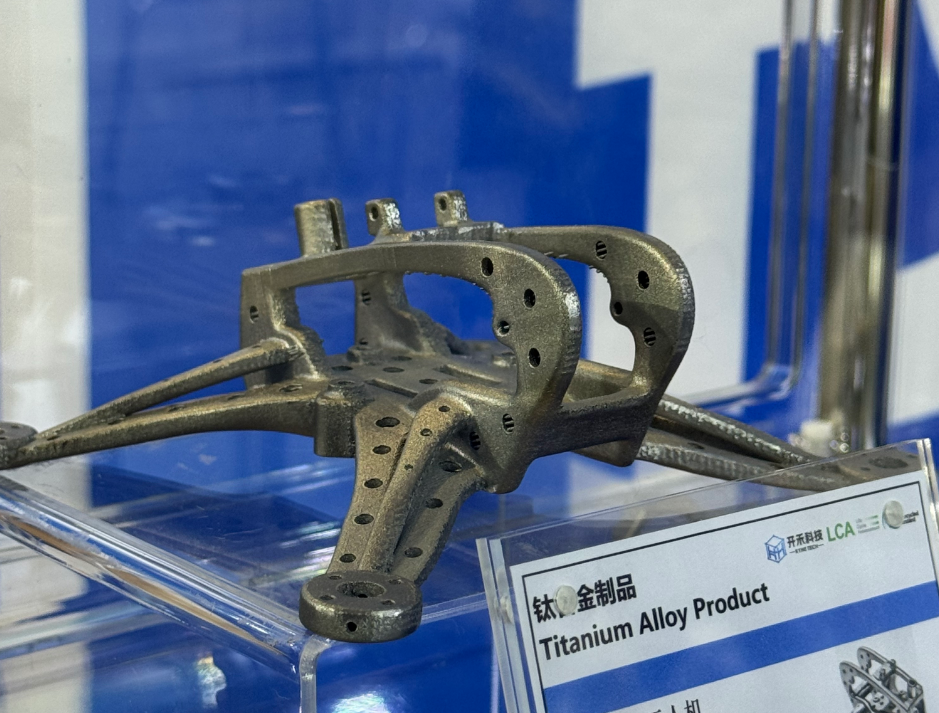
For companies that produce TC4 titanium powder, navigating these standards is part of the job. They have to know what their customers need. If a customer is making medical implants for the Chinese market, they might need powder that aligns with GB/T standards. If they are exporting parts to Europe or North America, they might need to meet ASTM or ISO specs.
The best powder suppliers design their processes to meet the most stringent requirements across multiple standards. They control chemistry tightly. They test regularly. They document everything. That way, they can serve a global customer base without missing a beat.
KYHE is one of those suppliers. Their focus on quality and consistency means that whether you need powder for MIM, for 3D printing, or for traditional manufacturing, you get material you can trust.
The Role Of Recycled Material In Meeting Standards
Here is another twist. Sustainability is becoming a bigger deal everywhere. Using recycled TC4 titanium powder is good for the planet and good for the bottom line. But recycled material has to meet the same standards as virgin.
That means tight control over chemistry. Oxygen can creep up during recycling. Other contaminants can sneak in. So if you are using recycled powder, you have to test it. You have to prove it meets the spec.
Companies with strong quality systems and certifications like GRS have an advantage here. They know how to handle recycled material without letting quality slip. They can offer sustainable options that still meet the strictest standards.
How Manufacturers Can Bridge The Gap
If you are a manufacturer trying to navigate this landscape, what should you do? First, know your market. What standards do your customers require? What regulations apply to your products?
Second, communicate with your powder supplier. Tell them what you need. Ask them how their material aligns with different standards. A good supplier will have that information ready.
Third, test your parts. Do not assume. Print specimens, test them, and verify that they meet the requirements. That is the only way to be sure.
Fourth, consider the whole process. Powder is just the start. The machine settings, the post processing, the heat treatment. All of it affects the final properties. You have to control the whole chain.
The Future Of Standards In Additive Manufacturing
Standards are not static. They evolve as technology evolves. As additive manufacturing grows, we are seeing more harmonization between different regions. Efforts are underway to align Chinese standards with international ones. That will make life easier for everyone.
But for now, the patchwork exists. And if you are working with TC4 titanium, you have to know which pieces of the puzzle apply to you.
The good news is that the material itself is well understood. TC4 titanium has been used for decades. Its behavior in different conditions is known. Whether you are working to GB/T 2965, ASTM F2924, or something else, the fundamentals are the same. It is a reliable, proven alloy.
Bringing It All Together
At the end of the day, standards are tools. They help ensure quality. They give everyone a common reference point. But they are not the whole story. The material matters. The process matters. The people making the parts matter.
If you are using TC4 titanium powder, take the time to understand the standards that apply to your work. Talk to your suppliers. Test your parts. And keep learning as the field evolves.
The world of additive manufacturing is moving fast. Standards will keep up. And with the right approach, you can navigate the differences and make great parts, no matter which spec you are working to.
Table of Contents
- What GB/T 2965 Actually Covers
- Why Powder Needs Its Own Set Of Rules
- The Chemistry Comparison
- Mechanical Property Requirements
- What This Means For Powder Suppliers
- The Role Of Recycled Material In Meeting Standards
- How Manufacturers Can Bridge The Gap
- The Future Of Standards In Additive Manufacturing
- Bringing It All Together
