
 EN
EN
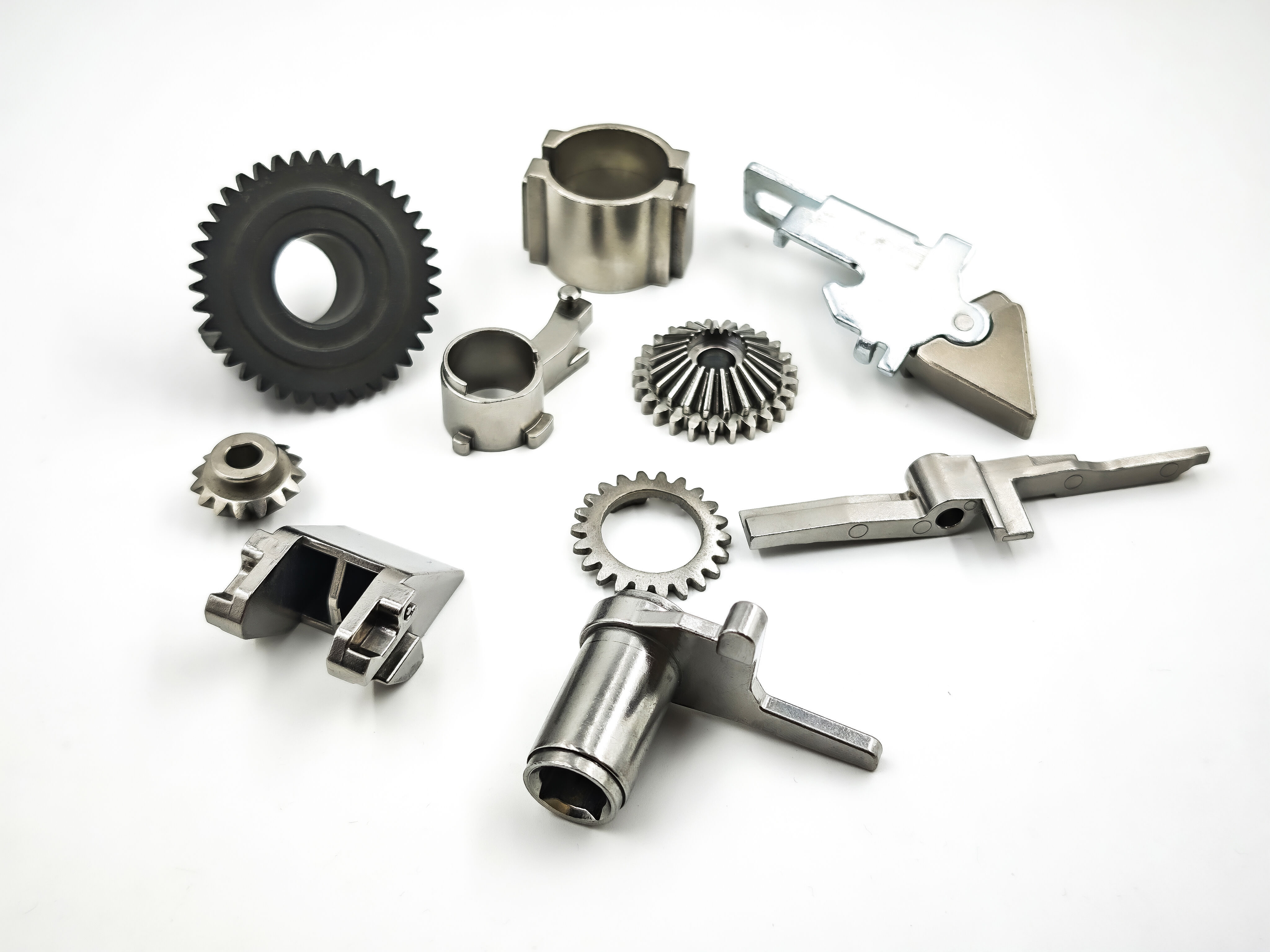
The Critical Role of MIM Manufacturing in Enabling Modern Miniaturization
If you've ever marveled at the seamless hinge of a folding smartphone, relied on a life-changing medical implant, or depended on a precision component in a critical aerospace system, you've indirectly interacted with the capabilities of Metal Injection Molding, or MIM.
In a world where products are constantly shrinking in size while expanding in functionality, manufacturers face a relentless challenge: how to produce exceptionally strong, complex, and tiny metal parts reliably and at scale. Traditional methods like machining are often wasteful and limited by tool access, while casting can struggle with fine detail and material integrity.
MIM manufacturing has emerged as the definitive answer to this modern dilemma, masterfully blending the design freedom of plastic injection molding with the full-performance properties of solid metal. It is the unsung hero behind the miniaturization revolution, enabling innovation across industries by turning ambitious designs into manufacturable realities.
Deconstructing the MIM Process: A Symphony of Steps
At its core, MIM is a multi-stage, powder metallurgy process that transforms fine metal powder into dense, high-strength components. Its power lies in the precise control of each sequential stage.
It all begins with Feedstock Formulation. Here, extremely fine, spherical metal powders—often smaller than 20 microns—are meticulously blended with a custom thermoplastic binder system. This creates a homogeneous pelletized feedstock that flows like plastic when heated but is packed with metal. The quality and consistency of the powder are paramount, as they directly dictate the final properties of the part.
Next, the feedstock undergoes Injection Molding. This is where MIM’s capability for complexity is unleashed. The feedstock is heated and injected under high pressure into a precision mold, identical to the process used for plastics. In a matter of seconds, it perfectly replicates intricate mold geometries, forming "green" parts with complex features like thin walls, internal channels, undercuts, and fine surface textures that would be impossible or prohibitively expensive to machine.
The third stage is Debinding, a critical and delicate operation. The molded green part contains a large volume of binder that must be removed without damaging the fragile metal powder skeleton. This is often done through a combination of solvent and thermal processes, which carefully extract the binder to leave a porous, handleable "brown" part. Precise control here prevents defects like cracking or slumping.
The final transformation occurs during Sintering. The brown part is placed in a high-temperature, controlled-atmosphere furnace. As the temperature approaches the metal’s melting point, solid-state diffusion takes over. The metal particles bond at their contact points, the part significantly densifies, and it undergoes predictable, isotropic shrinkage. This step eliminates porosity, restores the full metallurgical structure, and grants the component mechanical properties that rival those of wrought or machined metal.
The Technical Advantages That Make MIM Indispensable
MIM's ascendancy is not accidental; it is built upon a foundation of distinct technical and economic benefits that are perfectly aligned with the demands of contemporary manufacturing.
First is Unparalleled Geometrical Freedom and Part Consolidation. MIM obliterates the design constraints of traditional machining. It can produce single, monolithic parts that would otherwise require the assembly of multiple pieces. This eliminates joining operations, reduces potential failure points, improves reliability, and simplifies supply chains. A classic example is a complex gear housing that integrates gears, bosses, and mounting features as one inseparable unit.
Second is Exceptional Dimensional Precision and Material Performance. MIM is not just about complex shapes; it's about precision at scale. The process routinely holds tolerances within ±0.3% to ±0.5% of a dimension, with critical features controlled to within ±0.05 mm. Furthermore, because the part is formed from a uniform powder and sintered into a homogeneous structure, it exhibits consistent, isotropic mechanical properties—meaning its strength is uniform in all directions, unlike parts machined from bar stock which can have directional weaknesses.
Third is High-Volume Efficiency and Superior Material Yield. Once the tool is built, MIM is a high-speed, repeatable process with cycle times measured in seconds. More importantly, it is astonishingly material-efficient. While CNC machining may turn over half of a costly metal billet into waste chips, MIM is a net-shape process. The excess material can be granulated and reused, leading to material utilization rates often above 95%.
Driving Innovation Across Key Industries
The proof of MIM's transformative impact is vividly evident in its application across technology-driven sectors.
In the Medical and Dental Device industry, MIM is a life-enabling technology. It is the go-to method for manufacturing complex, miniaturized components from biocompatible stainless steels and titanium alloys—from intricate jaws for laparoscopic surgical tools to orthopedic implants and small gears for drug delivery pumps.
The Aerospace, Defense, and Automotive sectors leverage MIM for critical, performance-driven parts. Here, the focus is on lightweight strength and reliability. MIM produces fuel system components, heat-resistant turbocharger vanes, robust actuation system gears, and sensor housings.
In Consumer Electronics and Telecommunications, MIM enables the sleek, durable, and compact designs consumers demand. It is behind the ultra-precise, fatigue-resistant hinges in foldable phones, the tiny and robust SIM card trays and camera bezels, and the high-frequency connectors essential for modern infrastructure.
The Evolving Frontier: Sustainability and Digital Integration
The future of MIM is being shaped by two powerful trends that extend its value proposition beyond pure performance.
A major shift is toward Sustainable and Circular Material Flows. Leading-edge MIM practitioners are now integrating metal powders produced from recycled sources. Utilizing such powders, certified under standards like the Global Recycled Standard (GRS), dramatically lowers the carbon footprint from the very beginning of the production chain.
Furthermore, MIM is increasingly operating in a Hybrid Digital Ecosystem with Additive Manufacturing (AM). A synergistic workflow is now common: engineers use AM to rapidly prototype MIM part designs and even create advanced tooling. For final production, MIM takes over to deliver the unbeatable combination of complexity, material properties, and unit economics required for volume manufacturing.
Conclusion: The Foundational Technology for a Miniature World
Metal Injection Molding has matured from a specialty option into a foundational manufacturing technology. It uniquely solves the trilemma of complexity, performance, and scalable production that defines modern engineering challenges.
By enabling the reliable and cost-effective production of small, intricate, and high-strength metal parts, MIM sits at the heart of product advancement in nearly every cutting-edge industry. As material science advances and process digitalization deepens, the role of MIM will only become more central. For anyone tasked with designing the next generation of innovative products, a deep understanding of MIM's capabilities is not just an advantage; it is an essential tool for turning visionary concepts into tangible, high-quality reality.
