
 EN
EN
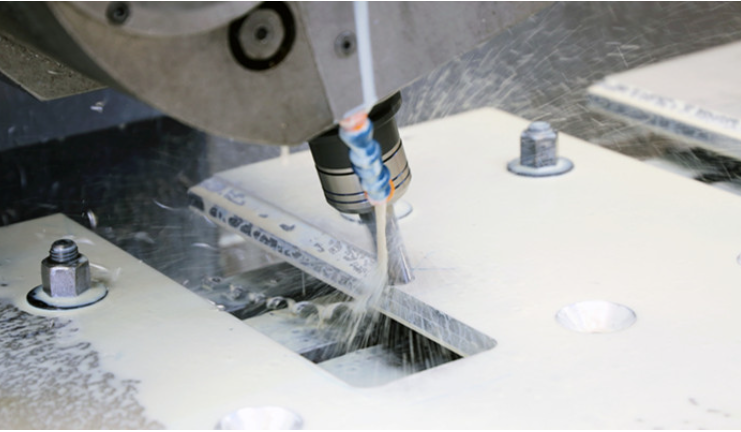
When companies face the challenge of producing complex titanium connectors in large volumes, traditional machining approaches often hit limitations. Titanium is a tough material, geometric requirements can be intricate, and the cost of machining waste adds a significant burden. Metal Injection Molding (MIM) technology has emerged as a powerful solution to these manufacturing hurdles. The demand for lightweight, geometrically sophisticated titanium components is growing across critical industries like aerospace, medical devices, automotive, and advanced electronics. This article details why MIM technology holds a competitive edge in the market for complex, high-volume titanium connectors and how the investment delivers a compelling return.
Peerless Design Flexibility for Innovative Connector Solutions
The design freedom offered by MIM for titanium connectors is truly unmatched compared to conventional fabrication. While CNC machining is a subtractive process limited by tool reach and linear cutting paths, MIM is fundamentally a net-shape process. It starts with fine titanium alloy powder blended with a binder, which is then injected into precision molds. This method captures the design flexibility of plastic injection molding but applies it to high-performance metal parts, enabling connector designs that are difficult or impossible to achieve otherwise.
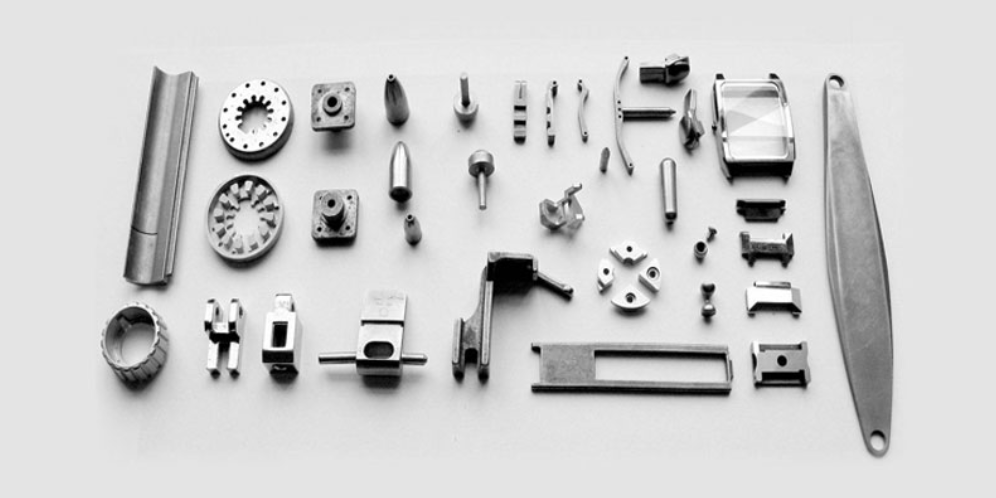
Using MIM, engineers can create connector geometries that would be too complex, costly, or time-consuming with traditional machining. This includes fluid system connectors with integrated internal lattice structures, electrical connectors featuring molded-in insulating barriers and contact points in a single step, and biomedical implant connectors with engineered surface textures for biological integration. MIM forms these intricate shapes in one manufacturing step, eliminating multiple secondary operations. This capability enables significant part consolidation, where an assembly of several machined components can be replaced by a single, integrated MIM part. The benefits extend to improved device reliability, streamlined inventory, and simpler assembly for manufacturers. MIM excels at producing small to medium-sized parts with fine details, tight tolerances, and high-quality surface finishes directly from the mold, minimizing the need for secondary machining.
Maintaining Material Performance and Ensuring Consistency
The operational performance of titanium connectors in demanding applications is critical. These parts must retain titanium’s inherent advantages: an excellent strength-to-weight ratio, superior corrosion resistance, and biocompatibility. A properly tailored MIM manufacturing process not only preserves these material characteristics but can enhance them through its controlled methodology.
Success starts with material selection. The process begins with high-quality, gas-atomized titanium powder featuring a controlled particle size distribution. Specialized suppliers focused on powder metallurgy excellence ensure consistent feedstock quality by carefully managing parameters like particle morphology, size, and oxygen content. In the sintering phase, components undergo controlled thermal cycles in a vacuum or argon atmosphere at temperatures just below the alloy’s melting point. This critical step removes the binder and promotes diffusion bonding between powder particles, resulting in a near-fully dense component with a uniform microstructure. The resulting material reliably meets or exceeds industry standards for mechanical performance. For connectors, this translates to reliable operation under high mechanical loads, pressure cycling, and exposure to harsh environments. Crucially for volume production, the MIM process delivers exceptional consistency in material properties from the first part to the hundred-thousandth, ensuring uniform performance and reliability across an entire production run.
The Compelling Cost Advantages of Volume Production
The initial tooling investment for MIM requires careful consideration, but the economic advantages become powerfully attractive at scale, especially for connector applications with annual needs ranging from thousands to millions of units. The per-part economics of MIM are particularly advantageous for complex geometries when compared to traditional manufacturing.
A key benefit is dramatic material efficiency. MIM typically achieves material utilization rates above 95%, starkly contrasting with the 60-80% material loss common when machining a part from titanium billet. Given titanium's cost, this reduction in waste significantly lowers overall production expense. Furthermore, the MIM process is highly amenable to automation in feedstock preparation, molding, and initial processing, which reduces direct labor costs per part. With cycle times measured in seconds and the ability to use multi-cavity molds, production throughput is substantial. Importantly, by delivering a near-net-shape part, MIM eliminates the multiple machining setups, specialized fixtures, and additional quality checks associated with secondary operations. For a complex titanium connector, consolidating dozens of potential machining steps into one MIM process offers tremendous time and cost savings that only increase with volume, making advanced titanium components economically viable for more applications.
Enhanced Manufacturing Efficiency and Seamless Scalability
Meeting high-volume production demands requires a process that balances precision with speed and scalability. MIM technology is engineered for this environment, with rapid molding cycles and multi-cavity tooling capable of producing large quantities of identical components in a single run.
This creates a streamlined, efficient production flow. Modern MIM facilities utilize advanced automation in material handling, molding, and debinding, ensuring consistent process execution. While the sintering phase involves a longer thermal cycle, it is a batch process where hundreds or thousands of components are processed simultaneously in large furnaces, enabling efficient scaling of production. For manufacturing partners with substantial capacity, this approach maximizes equipment utilization. Scaling output is straightforward: increased production is achieved by adding mold sets, increasing cavity counts, or extending run times. This predictable and repeatable manufacturing flow allows OEMs to plan their supply chains for critical titanium components with high reliability. The inherent consistency of MIM ensures that production ramp-up maintains identical quality standards, supporting just-in-time manufacturing and reducing inventory burdens for customers.
Unwavering Precision and Repeatable Quality Standards
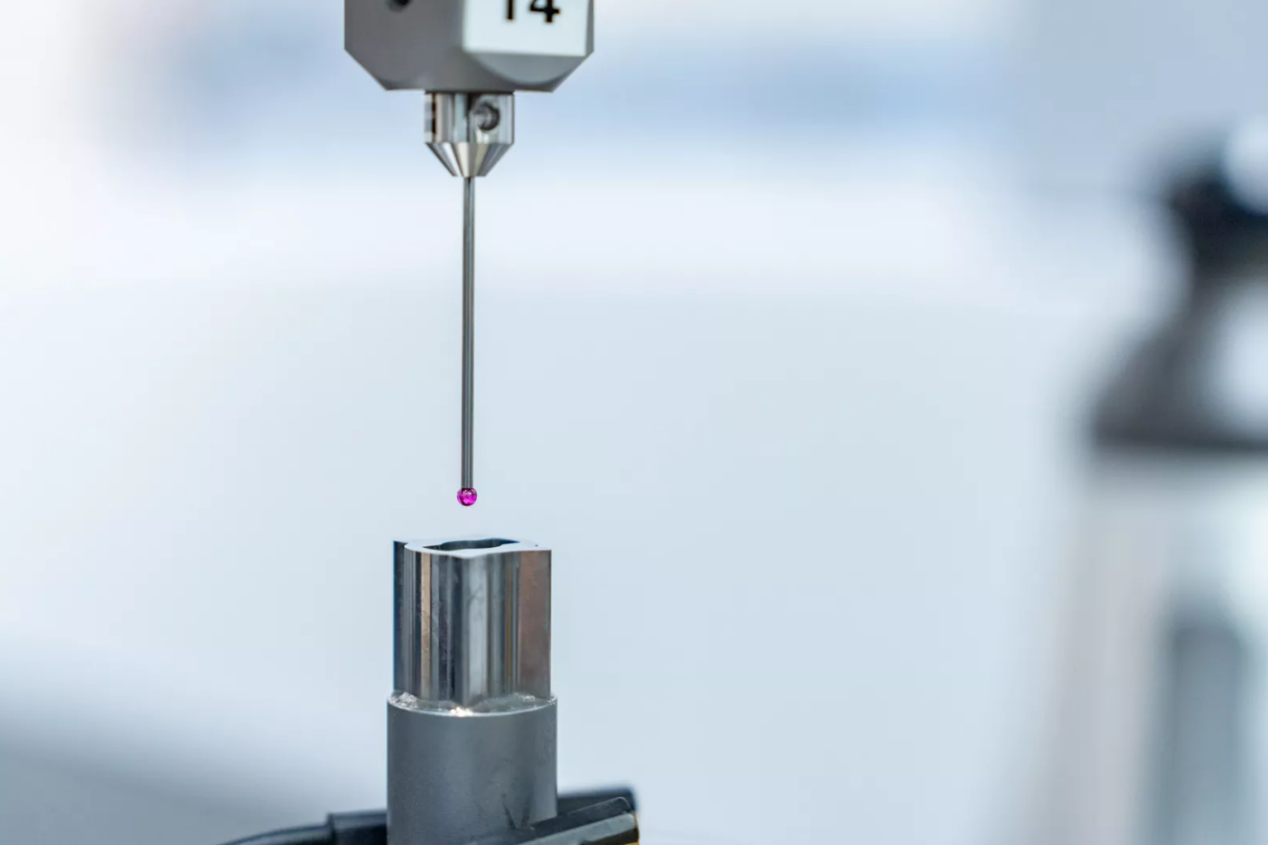
In high-volume manufacturing, consistent quality and dimensional precision across every production batch are as critical as the initial design. A connector that performs perfectly in prototype testing must perform identically in mass production. MIM technology delivers this repeatable precision through tightly controlled processes and systematic quality management.
The entire MIM manufacturing chain is governed by precise parameters: feedstock rheology, injection pressure and temperature, thermal debinding cycles, and sintering atmosphere profiles. This comprehensive control minimizes dimensional variation and ensures consistent material properties. High-precision, hardened steel molds maintain their dimensional stability over extended production runs, guaranteeing consistent part geometry. As a result, MIM-produced titanium connectors consistently achieve dimensional tolerances in the range of ±0.3% to ±0.5% of nominal dimensions, with even tighter control on critical features. Sealing surfaces, thread profiles, and interface geometries maintain their exact form and positional relationships throughout the production lifecycle. This level of manufacturing consistency reduces the need for extensive final inspection through statistical process control, minimizes delays from non-conforming parts, and ensures reliable integration during assembly. The result is a trusted supply chain partnership that readily meets the stringent certification requirements of regulated industries.
Environmental Benefits and Sustainable Manufacturing
Contemporary manufacturing decisions increasingly weigh environmental impact alongside technical and economic factors. MIM technology offers notable sustainability advantages, which are especially valuable when working with titanium—a metal whose primary production is energy-intensive.
The most direct benefit is drastically reduced material waste compared to subtractive methods. By using nearly all input material in the finished part, MIM aligns strongly with circular economy principles. Process scrap like sprues and runners can typically be recycled back into the feedstock stream, further boosting efficiency. Progressive material suppliers enhance this profile by offering certified recycled titanium powder options, reducing the environmental footprint from raw material extraction. When evaluated on a per-part basis across high-volume production, the aggregated energy consumption of the MIM process often compares favorably with the total energy required for the multiple machining steps it replaces. For organizations with established Environmental, Social, and Governance (ESG) commitments, MIM represents a demonstrably more sustainable pathway for producing high-performance metal components without compromising on performance.
Strategic Implementation and Technical Partnership
Successfully implementing MIM for titanium connector production requires thoughtful planning and a strong technical partnership. Beyond the process itself, successful volume manufacturing hinges on deep material expertise, precision tooling design, validated process parameters, and rigorous quality systems. Companies should seek partners with specific expertise in titanium MIM, as the handling, debinding, and sintering requirements differ significantly from those for more common materials like stainless steel.
Effective collaboration typically begins with Design for Manufacturability (DFM) analysis. Experienced MIM engineers work to optimize part designs for the process while ensuring all functional requirements are met. This early engagement identifies potential challenges and opportunities before tooling investment, reducing development time, cost, and risk. Leading manufacturing partners maintain complete process documentation and validation protocols, which is crucial for customers in regulated industries. Furthermore, they possess in-house testing capabilities for mechanical properties, dimensional validation, and application-specific performance, giving customers full confidence in the quality and reliability of every component.
Future Developments and Expanding Applications
Advances in material science and process technology continue to expand the possibilities for titanium MIM. Innovations in powder production are yielding finer, more uniform powders that enable better surface finishes and thinner wall sections. Developments in binder systems and debinding technology are shortening process times and allowing for even greater geometric complexity. Furthermore, hybrid manufacturing approaches that combine MIM with selective secondary machining or surface treatments are opening new doors for parts requiring both complex shapes and ultra-precise critical features.
Industry adoption is broadening as more engineers recognize MIM's capabilities. Beyond established uses in medical and aerospace, new applications are emerging in areas like specialized connectors for electric vehicle power systems, miniature components for semiconductor equipment, and corrosion-resistant fittings for chemical processing. As success stories accumulate, MIM is increasingly viewed not just as an alternative, but as the preferred manufacturing solution for titanium components that combine complexity, high performance, and volume production requirements.
Conclusion: MIM as a Strategic Manufacturing Solution
For the high-volume production of complex titanium connectors, Metal Injection Molding has firmly established itself as a premier strategic manufacturing choice. It successfully breaks the traditional compromise between part complexity, material performance, and economic feasibility. By delivering unmatched design freedom, maintaining the superior properties of titanium, driving down costs at scale, and enabling consistent, efficient, and more sustainable manufacturing, MIM empowers innovation. It allows designers and engineers to develop breakthrough solutions free from the constraints of conventional machining. As industries continue to push toward greater miniaturization and performance integration, MIM technology will undoubtedly play an increasingly vital role in shaping the future of advanced manufacturing.
