
 EN
EN
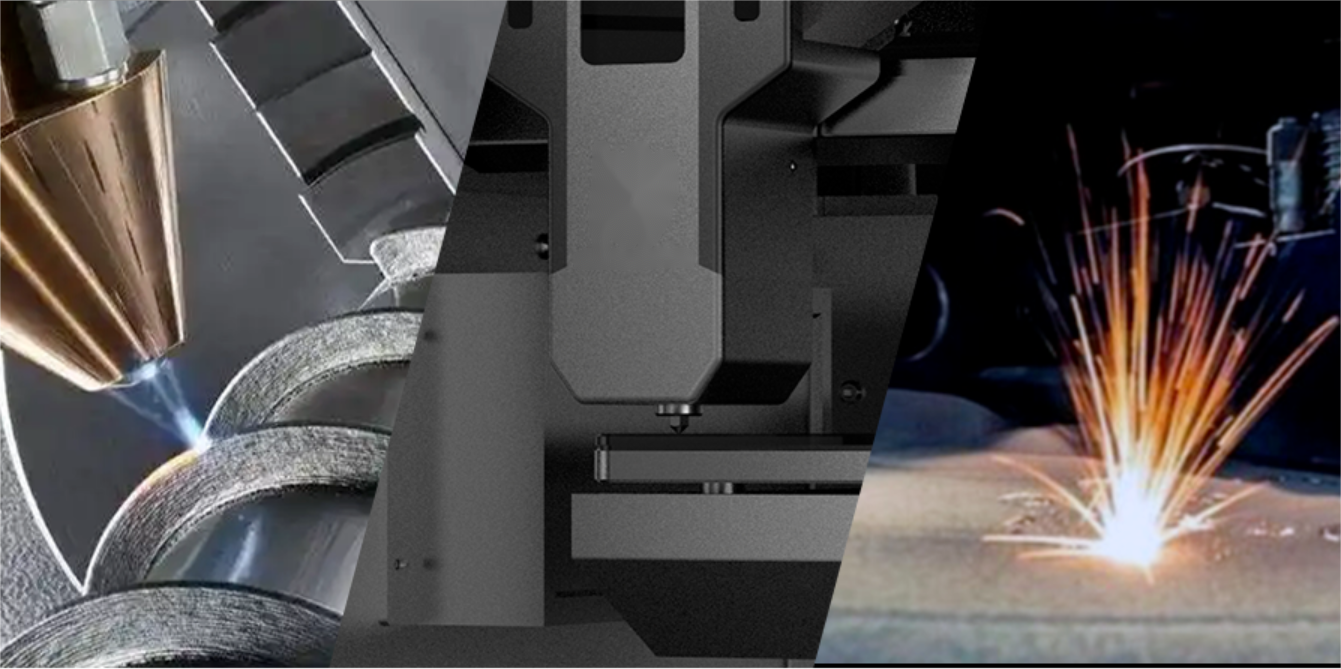
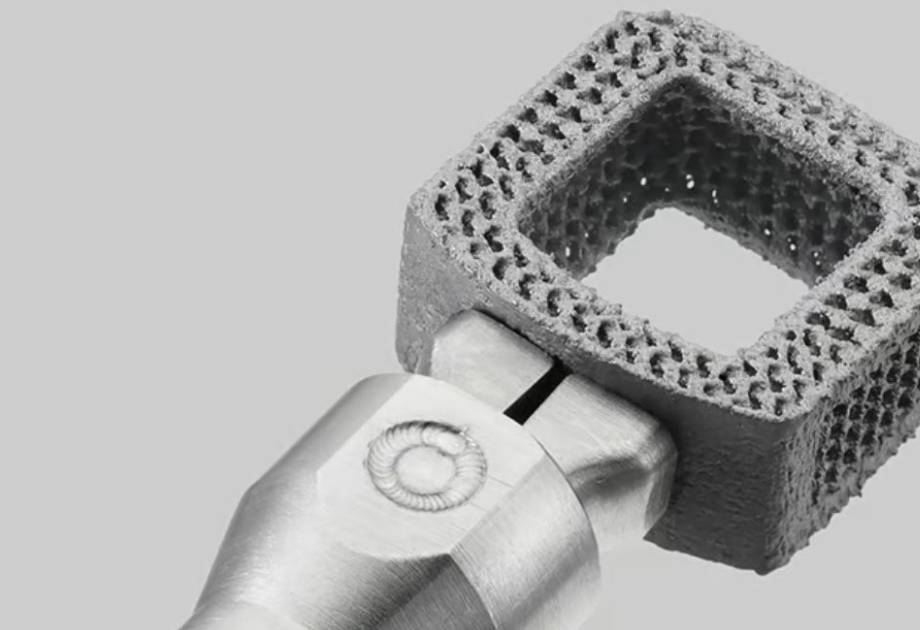
Considering titanium alloy powder for your next Metal Additive Manufacturing (AM) project? That's a smart decision. Titanium is renowned for its strength, and alloys like Ti-6Al-4V are among the fastest-growing materials in 3D printing. With its excellent corrosion resistance and low weight, it's the go-to choice for critical aerospace components and biomedical implants. However, sourcing the material is just the beginning. Producing a high-performance 3D-printed titanium part requires careful consideration of the entire ecosystem, including powder quality, the printing process, parameters, and post-processing. This guide examines key factors for optimizing your AM process with titanium alloy powder and explains how partnering with the right technology provider can de-risk your project.
Understanding the Foundation: Titanium Powder Characteristics Are Everything
It all starts with the powder. Not all titanium powders are created equal. Their physical characteristics are the most critical factors determining printability, mechanical properties, and final part cost.
The most important characteristic is powder morphology—the shape and size of the particles. For reliable and consistent layering in powder bed fusion, the powder must flow like fine sand. This requires highly spherical particles. Imagine the difference between pouring a container of smooth ball bearings and one of irregular, jagged sand. Spherical powder flows uniformly, ensuring the recoater blade deposits a consistent layer every time. This layer consistency is non-negotiable for achieving homogeneous melting, predictable density, and repeatable mechanical properties. This is where advanced powder production technology makes a decisive difference. Industry leaders like KYHE Tech utilize proprietary methods, such as their DH-S® technology, to produce highly spherical powder with an industry-leading hollow particle rate of less than 1%. A low hollow particle count is critical because hollow spheres can collapse during printing, creating defects in the final part.
Beyond shape, particle size distribution (PSD) is crucial. A tight, controlled PSD—typically ranging from 15 to 106 microns depending on the application—ensures predictable interaction with the laser or electron beam. An inconsistent distribution leads to uneven melting, porosity, and poor surface finish. Furthermore, chemical composition and purity are paramount. Titanium is reactive, and excessive oxygen or nitrogen can embrittle the alloy. For applications in medical, aerospace, or other regulated industries, it is essential to source powder from suppliers with stringent quality controls, relevant certifications, and comprehensive material documentation.
Selecting the Right Additive Manufacturing Process for Your Goals
Once you have selected a suitable powder, the next step is to pair it with the optimal printing technology. For titanium, the two leading processes are Selective Laser Melting (SLM) and Electron Beam Melting (EBM), both of which are Powder Bed Fusion (PBF) methods, each with distinct advantages.
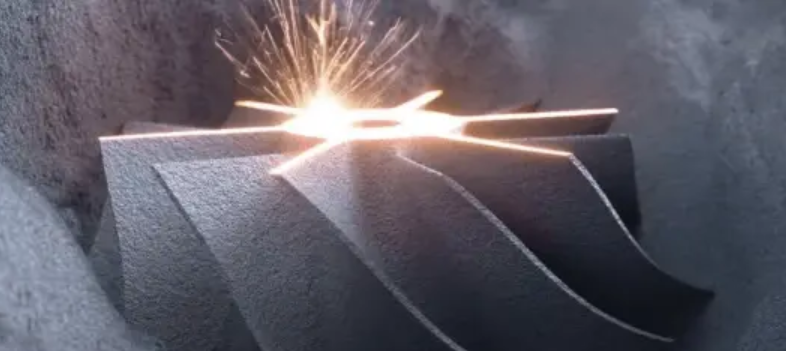
Selective Laser Melting (SLM) uses a laser to melt powder layer by layer inside a chamber filled with inert argon gas. This method excels at producing parts with high resolution, intricate geometries, and smooth surface finishes. It is particularly well-suited for custom orthopedic implants or complex components for fuel systems. However, the rapid heating and cooling cycles can induce residual stress, often necessitating strategically placed support structures and post-print stress-relief treatments.
Electron Beam Melting (EBM) employs a high-energy electron beam in a high-vacuum environment, which eliminates contamination risk for reactive materials like titanium. EBM operates at elevated temperatures (around 700°C), resulting in significantly lower residual stress and less part distortion compared to SLM. This allows for simpler support structures and can yield better mechanical properties in bulky, structural parts. The trade-off is a generally rougher surface finish. The choice between SLM and EBM often comes down to priorities: ultimate detail and surface quality (SLM) versus superior strength and lower stress in larger volumes (EBM). A full-service partner offering both MIM and AM technologies can provide unbiased guidance on the most cost-effective and performance-optimized manufacturing route for your specific component.
The Complete Workflow: From Powder to Finished Part
Successfully using titanium powder requires a safe, robust, and repeatable workflow divided into three phases: pre-build, build, and post-build operations.
Pre-Build: Powder Handling and Storage. Titanium powder requires careful handling and storage. It should be kept in sealed, moisture-resistant containers, often under an inert gas atmosphere. A disciplined powder management strategy is also critical. After a build, unused powder is not waste; it can be recovered, sieved, and blended with a portion of fresh powder for reuse. Advanced manufacturers have perfected this art, achieving material recycling rates of 95% or higher. Implementing such a closed-loop system is a cornerstone of sustainable additive manufacturing and a key capability of leaders like KYHE Tech. It directly addresses the historical challenge of material waste, dramatically improving the cost-effectiveness of titanium AM.
The Build: Printer Preparation and Parameter Mastery. Inside the printer, success is governed by a complex set of parameters: laser power, scan speed, hatch spacing, layer thickness, and more. These are bundled into a "material profile." Using generic profiles is risky. Optimal parameters must be carefully tuned to the specific powder lot, accounting for its unique PSD and flow characteristics. Leveraging a supplier’s application engineering expertise can significantly reduce development time and prevent costly build failures.
Post-Build: Essential Post-Processing. Once the build is complete, the part is encased in a block of sintered powder. After depowdering, several critical steps remain:
Stress Relief Heat Treatment: Almost always necessary to relieve internal stresses.
Hot Isostatic Pressing (HIP): A standard for high-integrity parts, HIP uses high heat and isostatic pressure to eliminate internal micro-porosity, significantly enhancing the part’s fatigue life and ensuring density.
Support Removal and Surface Finishing: Supports are removed, and surfaces are finished via machining, grinding, or blasting to meet final dimensional and aesthetic specifications.
The Strategic Advantage: Navigating Cost and Sustainability
The total cost of ownership is a primary consideration for adopting titanium AM. While titanium powder has historically been expensive, technological innovation is changing this equation. The key is process efficiency—minimizing waste and maximizing powder reuse.
A partner with an integrated, sustainable model offers a compelling advantage. By combining cost-optimized powder production (like KYHE Tech's DH-S® process, designed to lower powder costs) with ultra-high-efficiency recycling exceeding 95%, the overall cost structure of titanium AM improves significantly. This approach not only can cut material costs but also drastically reduces the carbon footprint, aligning with corporate ESG (Environmental, Social, and Governance) goals. This makes titanium AM not just a technical possibility but a commercially smart and environmentally responsible choice for a broader range of industries.
Partnering for Success: From Prototype to Certified Production
Scaling titanium additive manufacturing is rarely a solo endeavor. Collaborating with a vertically integrated solutions provider can de-risk the journey from prototype to serial production. The ideal partner offers more than just powder or printing services.
This includes co-design and Design for AM (DfAM) support to optimize parts for manufacturability and performance, often enabling component consolidation. They possess the technical expertise to recommend the optimal process—whether MIM for high-volume small parts or AM for complex prototypes and mid-volume production—and can develop validated printing parameters. Furthermore, they provide industrial-scale capacity and global support. A partner with substantial annual powder production capacity (e.g., >500T) ensures supply chain security for production programs. A global network, such as KYHE Tech's presence in over 60 countries, facilitates seamless integration into international supply chains and provides essential local support.
Conclusion: Unlocking Innovation with the Right Foundation
Utilizing titanium alloy powder for metal additive manufacturing is a powerful pathway to creating strong, lightweight, and complex components. Mastering this process requires a deep appreciation for both the material science and the manufacturing technology involved.
The path forward is clear: start with high-quality, spherical titanium powder from a technologically advanced source. Select the AM process that best matches your part's performance requirements. Master an agile, end-to-end workflow, incorporating safe handling, essential post-processing, and a closed-loop powder management strategy. Finally, evaluate the strategic value of a partnership that combines advanced powder technology, sustainable closed-loop operations, and application-specific engineering expertise.
By following this approach and collaborating with pioneers who are enhancing the economic viability of titanium—such as KYHE Tech with its focus on DH-S® eco-friendly powder and efficient manufacturing solutions—you can fully unlock the potential of titanium additive manufacturing. This empowers you to move beyond prototypes to production-ready components, securing a decisive competitive edge in the marketplace.
