
 EN
EN
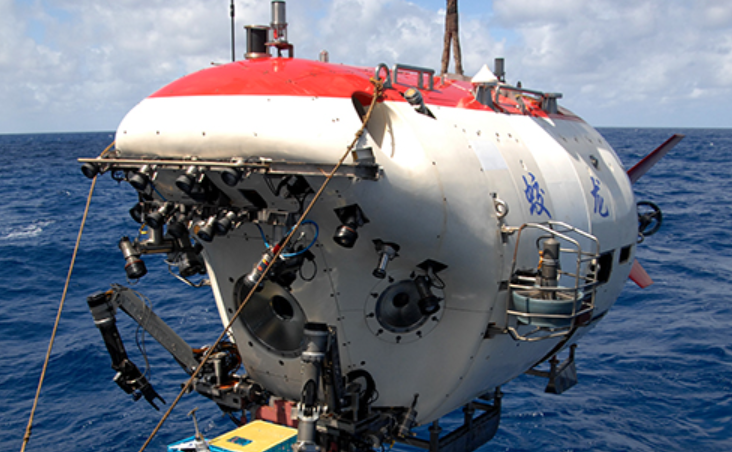
When it comes to marine equipment, the ocean presents a profoundly hostile environment. The industry must contend with corrosive moisture, microbial activity, and physical wear—all exacerbated by salt spray and constant dampness. Protecting critical components is about more than routine ship maintenance; it is fundamental to ensuring long-term operational integrity. While conventional coating solutions have their place, advanced thermal spray and additive manufacturing techniques utilizing metal powders are setting a new standard in marine protection. At the forefront of this innovation is titanium alloy powder, with Ti-6Al-4V being a prime example. Why is this particular powder so effective for safeguarding marine gear? The answer lies in a powerful combination of the material's innate properties and the unique advantages offered by the powder form.
The Need for Advanced Protection in a Demanding Marine Environment
The ocean is far more than a vast body of saltwater—it is a dynamic electrochemical medium that aggressively attacks most metals through galvanic corrosion, pitting, and crevice corrosion. Components also face cavitation erosion from collapsing bubbles, abrasive wear from sand and sediment, and biofouling, which refers to the accumulation of microorganisms, algae, or other organisms on submerged surfaces. Traditional protective systems such as galvanic anodes and paints, though widely used, often involve environmentally harmful materials, frequent reapplication, significant downtime, and rising costs. In contrast, dense, metallurgically bonded coatings applied via high-velocity oxygen fuel (HVOF), plasma spray, or laser cladding can provide longer service life and more reliable protection. The choice of powder material is crucial in creating a high-performance, tailor-made protective barrier.
The Distinctive Properties of Ti-6Al-4V Alloy
Ti-6Al-4V, also known as Grade 5 titanium, is not an arbitrary selection for marine applications. Its established reputation in aerospace and medical implants translates powerfully to the marine sector.
Superior Corrosion Resistance: When exposed to oxygen—even in aqueous environments—titanium naturally forms a stable, adherent oxide layer that provides outstanding corrosion resistance. Unlike stainless steels and other alloys, Ti-6Al-4V exhibits remarkable resistance to chloride-induced pitting and stress corrosion cracking in seawater. As a coating, it acts as an inert, impervious barrier that isolates the substrate from corrosive electrolytes.
Excellent Strength-to-Weight Ratio: The high specific strength of Ti-6Al-4V means coatings can be exceptionally tough and damage-resistant without adding substantial weight. This is particularly advantageous for moving parts such as propeller shafts and other components where weight savings are beneficial.
High Fatigue Resistance: The alloy's ability to withstand cyclic stresses from waves, vibration, and dynamic loading helps prevent crack initiation and propagation within the coating itself, ensuring long-term structural integrity.
Antifouling Characteristics: Titanium's bio-inert surface reduces the tenacity of marine organism adhesion compared to many other metals, which can simplify cleaning and maintenance efforts.
Why Powder Form is a Game-Changer for Coating Performance
The inherent virtues of Ti-6Al-4V are fully realized only when the coating is dense, well-bonded, and homogeneous. This is where the powder format becomes critical. In thermal spray processes, powder is injected into a high-temperature plume (e.g., plasma or combustion flame), where particles are accelerated and heated to a semi-molten state before impacting the substrate. The quality of the resulting coating—its density, oxide content, bond strength, and overall durability—is directly dictated by the quality of the feedstock powder.
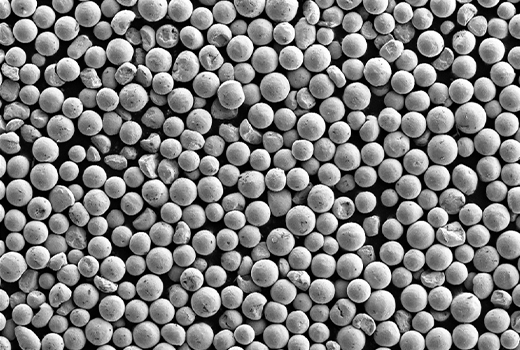
Powder Morphology is Key: Spherical, satellite-free powder particles ensure consistent flowability, which is essential for uniform feeding into the spray gun. A steady, uninterrupted powder feed is a prerequisite for depositing a coating with consistent thickness and microstructure. Irregular particle shapes can lead to clogging, inconsistent deposition, and compromised coating quality.
Controlled Particle Size Distribution (PSD): A tightly classified PSD ensures that particles heat and accelerate uniformly within the spray plume. Oversized particles may not melt completely, resulting in porous coatings, while excessively fine particles may overheat and oxidize. An optimized size distribution—typically between 15–45 μm or 45–106 μm depending on the process—is fundamental to forming a dense, well-bonded lamellar coating structure.
High Chemical Purity and Low Oxygen Content: The powder must contain very low levels of interstitial impurities such as oxygen and nitrogen. Elevated oxygen in the feedstock can embrittle the final coating and promote excessive in-process oxidation, creating weak points. Premium powders are produced and handled under inert atmospheres to preserve their metallurgical integrity and ensure superior coating performance.
The Critical Link: Powder Quality Dictates In-Service Performance
Using inferior powder often leads to coatings with hidden flaws: high porosity that permits electrolyte penetration, unmelted particles that act as stress concentrators, or excessive oxides that weaken cohesion. These defects become initiation sites for coating failure, ultimately exposing the base material. Conversely, high-quality spherical powder with controlled chemistry yields coatings that exhibit:
High Density: Minimized interconnected porosity to effectively block pathways for corrosive agents.
Strong Adhesion and Cohesion: Reliable bonding to the substrate and within the coating itself, even under mechanical and thermal stress.
Uniform Microstructure: Predictable and consistent corrosion and wear resistance across the entire coated surface.
This reliability enables marine engineers to specify Ti-6Al-4V coatings not only for repair but also as a critical design element in new components, extending service intervals and enhancing operational safety.
Sustainability and Economic Benefits
The marine industry is increasingly adopting sustainable practices. Advanced Ti-6Al-4V powder coatings contribute significantly by extending component lifespan, which reduces resource consumption, waste generation, and lifecycle costs. Moreover, innovative powder producers are now implementing sustainable manufacturing models, such as using certified recycled feedstock to produce high-performance powder. This approach markedly lowers the carbon footprint associated with titanium production. Sourcing powder from a supplier that utilizes a closed-loop, eco-efficient process amplifies the environmental benefit of your coating solution, aligning with modern Environmental, Social, and Governance (ESG) objectives.
Application Spotlight: Where Ti-6Al-4V Powder Coatings Excel
The applications for this technology span multiple marine sectors:
Propulsion Systems: Coating propeller blades, shafts, and rudder stocks to combat erosion-corrosion and cavitation damage.
Offshore Energy: Protecting subsea manifolds, Christmas trees, and splash zone components on platforms from relentless seawater attack.
Shipbuilding: Application in ballast tanks, heat exchangers, and hull fittings to prevent corrosion in critical, hard-to-maintain areas.
Marine Hardware: Enhancing the durability of fasteners, valves, and pumps subjected to continuous saltwater exposure.
Scientific and Sensor Equipment: Providing stable, corrosion-resistant surfaces for sensitive underwater instrumentation.
Conclusion: A Material Engineered for Maritime Challenges
Selecting a coating for marine components is a long-term decision with significant consequences. The unparalleled corrosion resistance, combined with high strength and durability, makes Ti-6Al-4V an elite choice. However, its success is entirely dependent on the form and quality of the feedstock. Only by using premium-grade, spherical ti6al4v powder with stringent chemical control can engineers fully unlock the potential of this alloy to create coatings that are more than just a superficial layer—they become a seamless, metallurgically robust extension of the component itself. In the ongoing battle against the marine environment, this choice builds confidence, reduces the total cost of ownership, and establishes a new benchmark for performance and sustainability.
Table of Contents
- The Need for Advanced Protection in a Demanding Marine Environment
- The Distinctive Properties of Ti-6Al-4V Alloy
- Why Powder Form is a Game-Changer for Coating Performance
- The Critical Link: Powder Quality Dictates In-Service Performance
- Sustainability and Economic Benefits
- Application Spotlight: Where Ti-6Al-4V Powder Coatings Excel
- Conclusion: A Material Engineered for Maritime Challenges
