3D printing can easily produce metal parts with complex structures and lightweight properties, which is highly attractive for next-generation high-end equipment such as aircraft and spacecraft that pursue weight reduction and integration. However, metal parts made by 3D printing generally have a critical flaw—poor fatigue performance, meaning they are prone to fatigue cracking under cyclic loading, severely limiting their key applications. Recently, a team led by Researchers Zhang Zhefeng and Zhang Zhenjun from the Institute of Metal Research, Chinese Academy of Sciences (IMR, CAS) has developed a new post-processing technology for 3D printing. The titanium alloy material produced through thisNAMPtechnology exhibits unprecedented fatigue resistance under various stress ratio conditions, with its comprehensive fatigue performance surpassing all known metal materials, thus removing a major obstacle for the application of 3D printing technology in high-precision and cutting-edge fields. The relevant research results have been published in Science Advances.
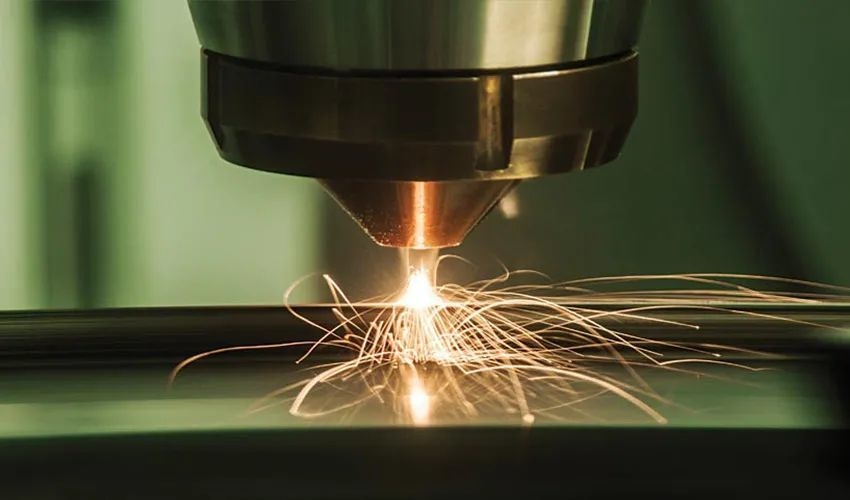
In early 2024, the team invented a new NAMP process that can precisely control the internal structure and defects of materials. Ti-6Al-4V, one of the most commonly used titanium alloys prepared by this process, can eliminate both micropores and coarse microstructures—both of which are the main culprits causing fatigue. This new material broke the world record for "specific fatigue strength" under "tension-tension" stress ratio conditions.
However, real-world parts such as aircraft engine blades and landing gear are subjected to extremely complex stress conditions, including not only "tension-tension" but also "tension-compression" scenarios, meaning the stress ratio is variable. Different stress ratios can trigger different damage mechanisms inside the material. The microstructures of traditional titanium alloys often have limitations—they perform well only under certain specific stress ratios but may underperform when the stress ratio changes. This makes it very difficult to manufacture a material that can perform well under all working conditions.

Faced with this more complex challenge, the research team identified several weak links in titanium alloys that are prone to fatigue cracking and the stress modes under which they occur. Using the NAMP process, they produced nearly pore-free 3D printed structures that can optimize all weak links simultaneously. This 3D printed titanium alloy possesses the characteristic of maintaining high fatigue strength under full stress ratio conditions.
Experimental data shows that in fatigue tests under different stress ratios, the fatigue strength of this new material not only exceeds that of all titanium alloys but also its "specific fatigue strength" is comprehensively superior to all metal materials, setting a new world record.


 EN
EN