Titanium metal, as a lightweight, high-strength, and corrosion-resistant material, possesses unique physical and chemical properties. Combined with a series of precise processing techniques, titanium metal products have reached new heights in both aesthetics and functionality. The following focuses on key titanium alloy surface treatment processes:
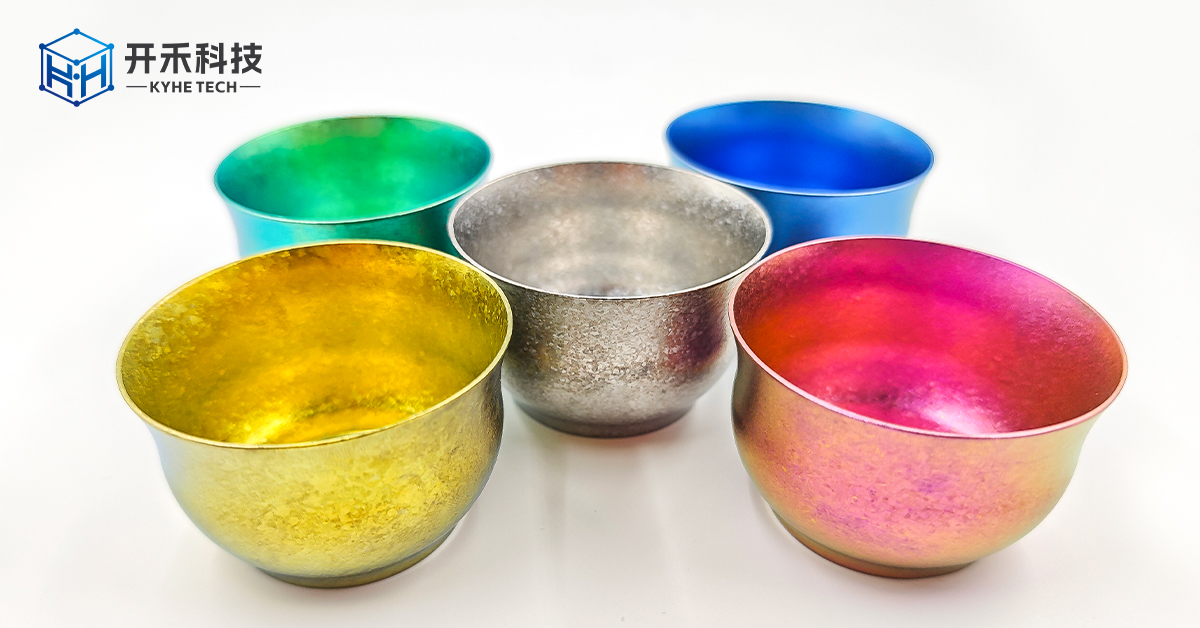
(1) Anodizing Process: This process uses electrochemical action to form a dense oxide film on the titanium metal surface. This not only enhances the corrosion resistance and hardness of the titanium metal but also allows for the creation of attractive colors, such as blue and purple, by adjusting the electrolytic conditions, greatly enriching the visual appeal of titanium metal products.
(2) Polishing Process: Through mechanical grinding, chemical polishing, or electrolytic polishing, the smoothness and brightness of the titanium alloy surface are improved, achieving a mirror (surface roughness Ra≤0.02μm) or semi-mirror effect. This effectively removes surface scratches and defects. This process not only enhances the aesthetics and surface flatness of the product but also improves corrosion resistance by reducing surface roughness, making it suitable for high-precision decorative parts, medical devices, and other products with strict surface quality requirements.

(3) PVD Coating Process: In a vacuum environment, metal or non-metal particles are deposited on the titanium metal surface to form a uniform and dense thin film. This process not only enhances the wear resistance and corrosion resistance of titanium metal but also allows for the creation of attractive colors by adjusting the coating materials and process parameters.

(4) Enameling Process: Enameling involves filling the entire base with colored enamel and then firing it in a high-temperature furnace at approximately 800°C. The enamel melts from a granular solid into a liquid, and after cooling, it becomes a brilliant enamel fixed to the base. At this point, the enamel is lower than the height of the copper wire, so the enamel needs to be filled again and fired again. This process is usually repeated four or five times until the pattern is filled to the same level as the cloisonné pattern.

(5) Sandblasting Process: Sandblasting is a process that uses the impact of a high-speed sand stream to clean and roughen the surface of the substrate. Compressed air is used as the power source to create a high-speed jet stream that propels abrasive materials (copper slag, quartz sand, corundum, iron sand, and Hainan sand) onto the surface of the workpiece, altering its surface appearance or shape.

(6) Wire Drawing Process: This process creates a delicate and uniform wire-like texture on the surface of titanium metal, enhancing the product's visual appeal and tactile feel. Wire drawing gives titanium metal products a unique texture and style, improving the overall aesthetics of the product.

(7) Colored Titanium Process: The colored titanium process uses high temperature and discharge technology to create an oxide film on the surface of titanium metal, resulting in a rich array of colors. This process does not require any paint or pigments, relying entirely on the natural properties of titanium and the oxidation reaction. The core of the colored titanium process lies in precise high-temperature control and current regulation, allowing the titanium surface to exhibit different color effects at different temperatures.

(8) Laser Engraving Process: Laser engraving, also known as laser marking, uses a high-energy laser beam to engrave the surface of titanium metal, creating exquisite patterns or text. Laser engraving is characterized by high precision, high efficiency, and non-contact processing, significantly enhancing the artistic value of titanium metal products.

(9) Micro-arc Oxidation Process: Micro-arc oxidation, also known as micro-plasma oxidation, uses a combination of electrolyte and corresponding electrical parameters to grow a ceramic film layer, primarily composed of the base metal oxide, on the surface of aluminum, magnesium, titanium, and their alloys through the instantaneous high-temperature and high-pressure effects generated by arc discharge.

KYHE Technology has extensive experience in the above titanium alloy surface treatment processes, focusing on customized services. Based on the specific needs of different industries and products, we can select and optimize the most suitable surface treatment process to ensure that recycled titanium alloy products meet both performance and aesthetic requirements.


 EN
EN